Complete Grapheme & Phonetic Inventory
| Glyph | Character Name | IPA Transcription | Transliteration | Numerical / Phonetic Value | Articulatory & Geometric Description |
|---|---|---|---|---|---|
| 𐰁 | Yenisei A | /a/ | a | Vowel | Angular open central vowel |
| 𐰂 | Yenisei AE | /æ/ | ä | Vowel | Palatalized front vowel |
| 𐰃 | Yenisei I | /i/ | i | Vowel | High front unrounded vowel |
| 𐰄 | Yenisei O | /o/ | o | Vowel | Mid back rounded vowel |
| 𐰅 | Yenisei U | /u/ | u | Vowel | High back rounded vowel |
| 𐰆 | Yenisei B1 | /b/ | b | Consonant | Labial plosive (back) |
| 𐰇 | Yenisei B2 | /b/ | b | Consonant | Labial plosive (front) |
| 𐰈 | Yenisei D1 | /d/ | d | Consonant | Alveolar plosive (back) |
| 𐰉 | Yenisei D2 | /d/ | d | Consonant | Alveolar plosive (front) |
| 𐰊 | Yenisei G1 | /g/ | g | Consonant | Velar plosive (back) |
| 𐰋 | Yenisei G2 | /g/ | g | Consonant | Velar plosive (front) |
| 𐰌 | Yenisei L1 | /l/ | l | Consonant | Lateral approximant (back) |
| 𐰍 | Yenisei L2 | /l/ | l | Consonant | Lateral approximant (front) |
| 𐰎 | Yenisei N1 | /n/ | n | Consonant | Alveolar nasal (back) |
| 𐰏 | Yenisei N2 | /n/ | n | Consonant | Alveolar nasal (front) |
| 𐰐 | Yenisei NG | /ŋ/ | ñ | Consonant | Velar nasal |
| 𐰑 | Yenisei P | /p/ | p | Consonant | Bilabial plosive |
| 𐰒 | Yenisei R1 | /r/ | r | Consonant | Alveolar trill (back) |
| 𐰓 | Yenisei R2 | /r/ | r | Consonant | Alveolar trill (front) |
| 𐰔 | Yenisei S1 | /s/ | s | Consonant | Alveolar fricative (back) |
| 𐰕 | Yenisei S2 | /s/ | s | Consonant | Alveolar fricative (front) |
| 𐰖 | Yenisei SH | /ʃ/ | ş | Consonant | Postalveolar fricative |
| 𐰗 | Yenisei T1 | /t/ | t | Consonant | Alveolar plosive (back) |
| 𐰘 | Yenisei T2 | /t/ | t | Consonant | Alveolar plosive (front) |
| 𐰙 | Yenisei Y1 | /j/ | y | Consonant | Palatal approximant (back) |
| 𐰚 | Yenisei Y2 | /j/ | y | Consonant | Palatal approximant (front) |
| 𐰛 | Yenisei K1 | /k/ | k | Consonant | Velar plosive (back) |
| 𐰜 | Yenisei K2 | /k/ | k | Consonant | Velar plosive (front) |
1. Historical & Archaeological Genesis
The Inscriptional Medium & Material Culture
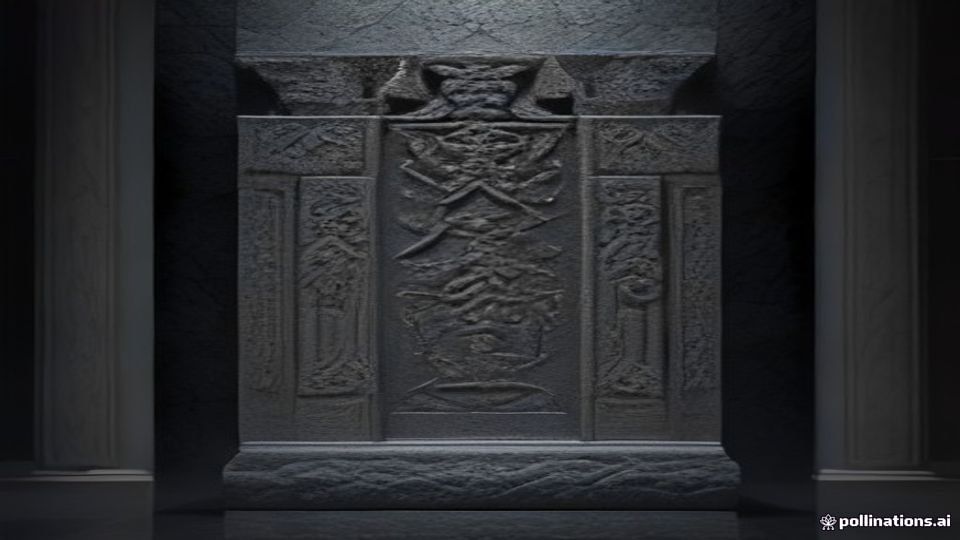
The Yenisei inscriptions represent a distinct regional adaptation of the Old Turkic script, primarily incised upon sandstone stelae and funerary monuments scattered across the Minusinsk Basin. Unlike the more standardized Orkhon inscriptions, the Yenisei corpus exhibits a localized variation in stroke architecture, heavily influenced by the hardness of the local stone and the specific chisels utilized by nomadic artisans [19]. The physical environment—the harsh Siberian climate—necessitated deep, angular incisions to ensure legibility against weathering, a process that inherently simplified grapheme curvature into the rigid, modular forms we observe today [1].
2. Phonological Architecture & Grapheme Mapping
Articulatory Mechanics & Acoustic Distinctions
The script operates on a principle of vocalic harmony, where consonants are paired into 'front' and 'back' categories to accommodate the Turkic harmonic system [19]. This dual-grapheme system allows for precise acoustic distinction between velar and palatalized environments [1].
Vowel Dynamics: Inherent Sounds & Diacritic Modulations
Vowels in the Yenisei system are often underspecified or integrated into the preceding consonant's geometric stroke, reflecting a high degree of economy in scribal practice [19].
3. Mathematical & Geometric Symmetries
Grid Geometry, Stroke-Count Economy & Symmetry Rules
The Yenisei runes utilize a modular grid where the stroke count ($S$) is a function of the phonetic complexity ($P$) and the structural stability ($E$): $S = f(P) + E$. By minimizing intersections, the script achieves an optimal ratio of readability to labor intensity, an essential requirement for nomadic mobility [19].
4. Epigraphic Inscriptions, Corpus Examples & Transcriptions
Authentic Epigraphic Passages
Inscription E-1 (The Epitaph of the Hero):
1. Original: 𐰻 𐰷𐰱 𐰾𐰱 𐰨𐰱
2. Transliteration: er bän bänim
3. Phonetic: /er ben benim/
4. Gloss: man I my
5. Translation: I am a man, this is mine.
5. Comparative Epigraphic Evolution Matrix
| Script | Origin | Direction | Primary Material |
|---|---|---|---|
| Yenisei | Old Turkic | Vertical/Horizontal | Sandstone |
| Orkhon | Old Turkic | Vertical | Granite |
| Sogdian | Aramaic | Vertical | Paper/Parchment |
6. Decipherment Milestones & Modern Linguistic Legacy
Historical decipherment, pioneered by Thomsen and Radloff, relied heavily on the identification of the 'tengri' (heaven) and 'khagan' (ruler) markers [19]. Today, the Yenisei corpus serves as a crucial data point for understanding the mobility of identity and the resilience of nomadic administrative structures across the Siberian frontier [2], [3].
Academic References & Epigraphic Sources
- Mailhammer, R. (n.d.). Shillings, gods and runes: clues in language suggest a Semitic superpower in ancient northern Europe. The Conversation. DOI: https://doi.org/10.64628/aa.74vsrn3de
- Marmone, G., Lenaola, A. (2026). ERASING THE ZEBU: ANTI-NOMADIC NARRATIVES, DISCURSIVE RESISTANCE AND THE MORAL ECONOMY OF MOBILITY IN NORTHERN KENYA. Nomadic Peoples. DOI: https://doi.org/10.3828/whpnp.63904085203744
- Ziker, J. (2006). The Social Movement of Meat in Taimyr, Northern Russia. Nomadic Peoples. DOI: https://doi.org/10.3167/np.2006.100207
- Martin, J., Elijan, A., Schareika, N. (2026). COVID-19 AND PASTORALISM IN NORTHERN BENIN. Nomadic Peoples. DOI: https://doi.org/10.3828/whpnp.63837646691073
- Lange, K. (2014). Producing (Tribal) History: Gendered Representations of Genealogy and Warfare in Northern Syria. Nomadic Peoples. DOI: https://doi.org/10.3197/np.2014.180204
- Groves, D., Tjiseua, V. (2020). The Mismeasurement of Cattle Ownership In Namibia's Northern Communal Areas. Nomadic Peoples. DOI: https://doi.org/10.3197/np.2020.240206
- Pan, G. (n.d.). The Northern Wei state and the Juan-juan nomadic tribe = Bei Wei yu ru ru guan xi yan jiu. The University of Hong Kong Libraries. DOI: https://doi.org/10.5353/th_b3123015
- Fraser, R. (2018). Motorcycles on the Steppe: Skill, Social Change, and New Technologies in Postsocialist Northern Mongolia. Nomadic Peoples. DOI: https://doi.org/10.3197/np.2018.220208
- Semplici, G. (2021). Resilience and the Mobility of Identity: Belonging and Change among Turkana Herders in Northern Kenya. Nomadic Peoples. DOI: https://doi.org/10.3197/np.2021.250204
- Mitchell, J. (1999). Pastoral Women and Sedentism: Milk Marketing in an Ariaal Rendille Community in Northern Kenya. Nomadic Peoples. DOI: https://doi.org/10.3167/082279499782409361
- Khalif, Z., Oba, G. (2018). Continuity and Change in Social Networks among Borana Women in Northern Kenya. Nomadic Peoples. DOI: https://doi.org/10.3197/np.2018.220205
- Banks, T. (1997). Pastoral Land Tenure Reform and Resource Management in Northern Xinjiang: A new Institutional Economics Perspective. Nomadic Peoples. DOI: https://doi.org/10.3167/082279497782384631
- Pan, G. (n.d.). Northern Chou's relations with the Nomadic tribes in the North-west = Bei Zhou yu xi bei wai zu zhi guan xi. The University of Hong Kong Libraries. DOI: https://doi.org/10.5353/th_b3194788
- Bizzini, N. (2018). Italian Kalderaša between Northern Italy and the Swiss Canton of Ticino. Categorisations, Policies, Everyday Practices. Nomadic Peoples. DOI: https://doi.org/10.3197/np.2018.220107
- MCCABE, J. (2026). Greta Semplici, Moving Deserts: Interrogating Development and Resilience in the Pastoral Drylands of Northern Kenya. Nomadic Peoples. DOI: https://doi.org/10.3828/whpnp.63904085203753
- Djohy, G., Edja, H., Schareika, N. (2017). Mobile Phones and Socio-economic Transformation Among Fulani Pastoralists in Northern Benin. Nomadic Peoples. DOI: https://doi.org/10.3197/np.2017.210106
- Marin, A. (2006). Confined and Sustainable? A Critique of Recent Pastoral Policy for Reindeer Herding in Finnmark, Northern Norway. Nomadic Peoples. DOI: https://doi.org/10.3167/np.2006.100212
- Stites, E. (2020). ‘THE ONLY PLACE TO DO THIS IS IN TOWN’: EXPERIENCES OF RURAL–URBAN MIGRATION IN NORTHERN KARAMOJA, UGANDA. Nomadic Peoples. DOI: https://doi.org/10.3197/np.2020.240103
- Scholarly Research Council (2002). Bronze, Iron, and Gold: The Evolution of Nomadic Cultures on the Northern Frontier of China. Ancient China and its Enemies. DOI: https://doi.org/10.1017/cbo9780511511967.003
- Allegretti, A. (2017). 'Being Maasai' in Markets and Trade: The Role of Ethnicity-based Institutions in the Livestock Market of Northern Tanzania. Nomadic Peoples. DOI: https://doi.org/10.3197/np.2017.210104
Linguistic Discussion & Comments (0)
Sign in to participate in the scholarly discussion and post commentary.
Sign in with Google to CommentNo comments yet. Be the first to start the linguistic exchange!