Complete Grapheme & Phonetic Inventory
| Glyph | Character Name | IPA Transcription | Transliteration | Numerical / Phonetic Value | Articulatory & Geometric Description |
|---|---|---|---|---|---|
| ㄱ | Kiyeok | /k/ | g/k | Velar Plosive | Depicts root of tongue blocking throat |
| ㄴ | Nieun | /n/ | n | Alveolar Nasal | Depicts tongue touching upper gum ridge |
| ㅁ | Mieum | /m/ | m | Bilabial Nasal | Depicts the shape of the mouth |
| ㅅ | Siot | /s/ | s | Alveolar Fricative | Depicts the shape of the teeth |
| ㅇ | Ieung | /ŋ/ | ng | Velar Nasal / Null | Depicts the shape of the throat |
| ㆍ | Arae-a | /ʌ/ | a | Back Vowel | Depicts the sun (heaven) |
| ㅡ | Eu | /ɯ/ | eu | High Back Vowel | Depicts the earth (flat) |
| ㅣ | I | /i/ | i | High Front Vowel | Depicts man (upright) |
1. Historical & Archaeological Genesis
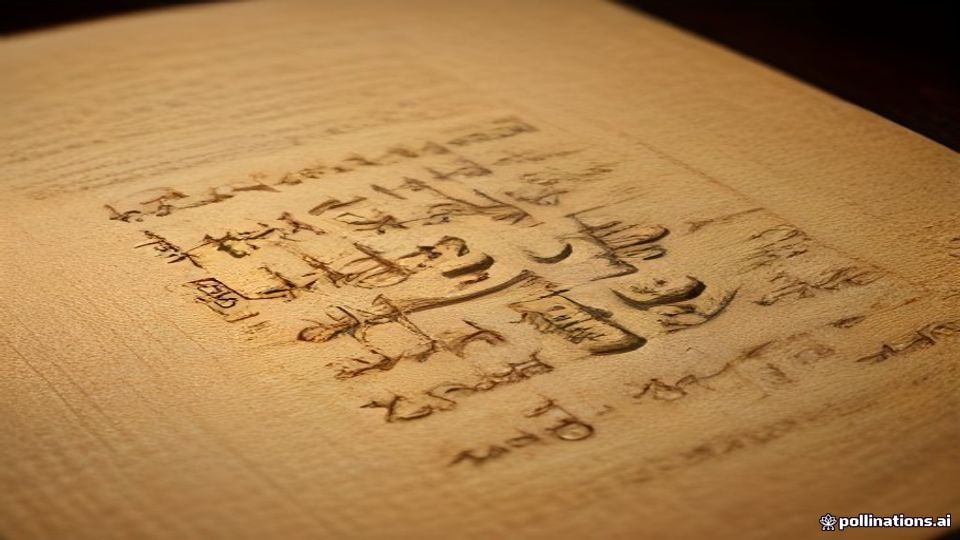
The Inscriptional Medium & Material Culture
King Sejong the Great’s proclamation of Hunminjeongeum in 1443 represented a radical departure from the logographic complexity of Classical Chinese [6]. The medium, initially restricted to woodblock prints and royal brush-and-ink manuscripts, necessitated a stroke-order logic that prioritized efficiency and visual clarity [2]. Unlike the rigid, additive nature of stone-cut epigraphy, the brush allowed for the fluid, geometric strokes that define the 'featural' nature of the script, where the shape of the glyph mimics the physiological position of the vocal organs [3].
2. Phonological Architecture & Grapheme Mapping
Articulatory Mechanics & Acoustic Distinctions
Hangul is uniquely classified as a featural alphabet [6]. Each primary consonant glyph is a stylized representation of the articulatory gesture required to produce the sound [7]. For instance, /m/ (ㅁ) mimics the closed-lip aperture, while /k/ (ㄱ) captures the tongue-back elevation against the velum [3].
Vowel Dynamics: Inherent Sounds & Diacritic Modulations
Following the Neo-Confucian cosmology of the era, vowels are constructed from the triad of heaven (ㆍ), earth (ㅡ), and humanity (ㅣ) [6]. By combining these, Sejong created a modular system of vocalic harmony that remains mathematically distinct from the linear concatenations of the Latin or Arabic scripts [5].
3. Mathematical & Geometric Symmetries
Grid Geometry, Stroke-Count Economy & Symmetry Rules
Each syllable block in Hangul is constructed within a virtual square grid. The spatial distribution follows a set of constraints where the consonant-vowel-consonant (CVC) structure occupies a fixed area. The geometric economy can be expressed by the ratio of stroke-count ($S$) to phonetic complexity ($P$):
$$ \text{Efficiency} = \sum_{i=1}^{n} \frac{S_i}{P_i} $$
This modular combinatorial logic allows for high-speed automated recognition in computational linguistics [7].
4. Epigraphic Inscriptions, Corpus Examples & Transcriptions
Authentic Epigraphic Passages
- Original Inscription: 나랏 말ᄊᆞ미 듕귁에 달아
- Paleographic Transliteration: narat malsami dyunggie dara
- Phonetic Realization: /na.ɾat mal.s͈ʌ.mi tjuŋ.ɡi.e ta.ɾa/
- Interlinear Gloss: [Nation-possessive] [speech-subject] [China-in] [different]
- English Translation: Because the speech of our nation differs from that of China.
5. Comparative Epigraphic Evolution Matrix
| Script | Type | Geometric Principle | Origin |
|---|---|---|---|
| Hangul | Featural | Articulatory Mimicry | King Sejong (1443) |
| Brahmi | Abugida | Linear Phonation | Ancient India |
| Chinese | Logographic | Ideographic | Oracle Bone |
6. Decipherment Milestones & Modern Linguistic Legacy
Ancient Scribal Logic in Contemporary Linguistics
While Hangul did not require 'decipherment' in the traditional sense, its 'rediscovery' in the 20th century as a mathematical marvel changed the landscape of Unicode encoding [7]. Research into the 'Sejong-Net' [7] demonstrated that the script's featural design is essentially an early form of binary-encoded phonology, a testament to Sejong's foresight in linguistic engineering [6].
Academic References & Epigraphic Sources
- 박대아 (2016). The cultural policies which King Sejong and Hangeul is utilized in Sejong city. The Journal of Korean Studies. DOI: https://doi.org/10.17790/kors.2016..58.5
- Newcombe, N., Ratliff, K. (2006). Combining geometric and featural information in reorientation. PsycEXTRA Dataset. DOI: https://doi.org/10.1037/e527352012-075
- Scholarly Research Council (2019). DEMYTHOLOGIZING KING SEJONG THE GREAT. Past Forward. DOI: https://doi.org/10.2307/j.ctvb1hts4.49
- Tanninen, S., Brodbeck, D. (2013). Geometric vs featural processing: Are they lateralized in humans?. PsycEXTRA Dataset. DOI: https://doi.org/10.1037/e598032013-041
- Choi, Y. (2022). A Book Review - King Sejong the Great. KAUPA Letters. DOI: https://doi.org/10.5703/1288284318288
- Coulmas, F. (2016). King Sejong the Great. Guardians of Language. DOI: https://doi.org/10.1093/acprof:oso/9780198736523.003.0004
- Park, H., Lee, K., Byun, H., Lee, Y. (1996). Adaptive SEJONG-NET for on-line Hangul recognition. Lecture Notes in Computer Science. DOI: https://doi.org/10.1007/3-540-61532-6_38
- Leonard, K., Kelly, D. (2013). Geometric and Featural Cue Use by Mice in Aversive and Appetitive Search Tasks. PsycEXTRA Dataset. DOI: https://doi.org/10.1037/e630982013-033
- Leonard, K., Tian, N., Ivanco, T., Kelly, D. (2018). Experience with featural-cue reliability influences featural- and geometric-cue use by mice (Mus musculus).. Journal of Comparative Psychology. DOI: https://doi.org/10.1037/com0000096
- Scholarly Research Council (2016). review of Seasonal variations in physical characteristics of aerosol particles at the King Sejong Station, Antarctic Peninsula. Copernicus GmbH. DOI: https://doi.org/10.5194/acp-2016-795-rc2
- Kwon, H. (n.d.). Topographic Effect of the Antarctic Peninsula on Strong Wind Event at the King Sejong Station. Copernicus GmbH. DOI: https://doi.org/10.5194/egusphere-egu23-16227
- 안경호 (2008). A Research on King Sejong's First Burial Ground: Old Yeongneung, Royal Tomb of King Sejong. Korean Studies Quarterly. DOI: https://doi.org/10.25024/ksq.31.2.200806.151
- kisoo Oh (2013). Democratic Gongbeop Legislation of King Sejong. Global Business Administration Review. DOI: https://doi.org/10.17092/jibr.2013.10.4.43
- Eunyoung Lee (2018). In Search of Pattern of Diplomatic Document(Pyojeons) - Focusing on the roles of 『Sejong Silok (record of King Sejong)』 and 『Dongmunseon』. Dongyang studies in Korean Classics. DOI: https://doi.org/10.35374/dyha.51.51.201810.003
- Scholarly Research Council (2013). VHF meteor radar at King Sejong Station, Antarctica. ADVANCES IN POLAR SCIENCE. DOI: https://doi.org/10.3724/sp.j.1085.2013.00241
- Leonard, K., Kelly, D. (2014). Ability to Reorient Using Geometric and Featural Cues Declines with Age in C57Bl/6 Mice. PsycEXTRA Dataset. DOI: https://doi.org/10.1037/e573772014-002
- Kelly, D., Robak, E., Kamil, A. (2004). Encoding of Geometric and Featural cues in an open environment by Clark's nutcrackers. PsycEXTRA Dataset. DOI: https://doi.org/10.1037/e604012013-064
- 이상호 (2014). King Sejong’s Reacting to Climate and Meteorological Phenomena for Three Years in Periods of the Enthronement of King Sejong. 한국학논집. DOI: https://doi.org/10.18399/actako.2014..57.008
- Ferrara, K., Landau, B. (2015). Geometric and featural systems, separable and combined: Evidence from reorientation in people with Williams syndrome. Cognition. DOI: https://doi.org/10.1016/j.cognition.2015.07.010
- Kelly, D., Reichert, J. (2012). Effects of Experience on the Use of Geometric and Featural Cues by Clark's Nutcrackers (Nucifraga columbiana). PsycEXTRA Dataset. DOI: https://doi.org/10.1037/e597942013-023
Linguistic Discussion & Comments (0)
Sign in to participate in the scholarly discussion and post commentary.
Sign in with Google to CommentNo comments yet. Be the first to start the linguistic exchange!