Complete Grapheme & Phonetic Inventory
| Glyph | Character Name | IPA Transcription | Transliteration | Numerical / Phonetic Value | Articulatory & Geometric Description |
|---|---|---|---|---|---|
| 𐼰 | Aleph | /ʔ/ | ʾ | Glottal stop | Vertical stroke with medial hook |
| 𐼱 | Beth | /β/ | β | Labiodental fricative | Rounded cursive loop |
| 𐼲 | Gimel | /ɣ/ | γ | Velar fricative | Angular descending stroke |
| 𐼳 | Daleth | /ð/ | δ | Dental fricative | Sharp diagonal inflection |
| 𐼴 | He | /h/ | h | Glottal fricative | Open-ended vertical curve |
| 𐼵 | Waw | /w/ | w | Semivowel | Elongated vertical descent |
| 𐼶 | Zayin | /z/ | z | Alveolar fricative | Zig-zagging horizontal shift |
| 𐼷 | Heth | /x/ | x | Voiceless velar fricative | Complex medial knot |
| 𐼸 | Teth | /t'/ | ṭ | Emphatic dental plosive | Enclosed circular geometry |
| 𐼹 | Yodh | /j/ | y | Palatal approximant | Short medial hook |
| 𐼺 | Kaph | /k/ | k | Velar plosive | Open arc structure |
| 𐼻 | Lamedh | /l/ | l | Lateral liquid | High-reaching vertical ascender |
| 𐼼 | Mem | /m/ | m | Bilabial nasal | Triple-stroke cursive wave |
| 𐼽 | Nun | /n/ | n | Alveolar nasal | Simple vertical descent |
| 𐼾 | Samekh | /s/ | s | Alveolar sibilant | Broad circular loop |
| 𐼿 | Ayin | /ʔ/ | ʿ | Glottal stop | Sharp angular hook |
| 𐽀 | Pe | /p/ | p | Bilabial plosive | Closed rounded form |
| 𐽁 | Tsade | /ts/ | c | Affricate | Multi-segmented tail |
| 𐽂 | Qoph | /q/ | q | Uvular plosive | Deep descending curve |
| 𐽃 | Resh | /r/ | r | Alveolar trill | Minimalist vertical stroke |
| 𐽄 | Shin | /ʃ/ | š | Postalveolar fricative | Bifurcated upper stroke |
| 𐽅 | Taw | /t/ | t | Dental plosive | Linear terminal stroke |
1. Historical & Archaeological Genesis
The Inscriptional Medium & Material Culture
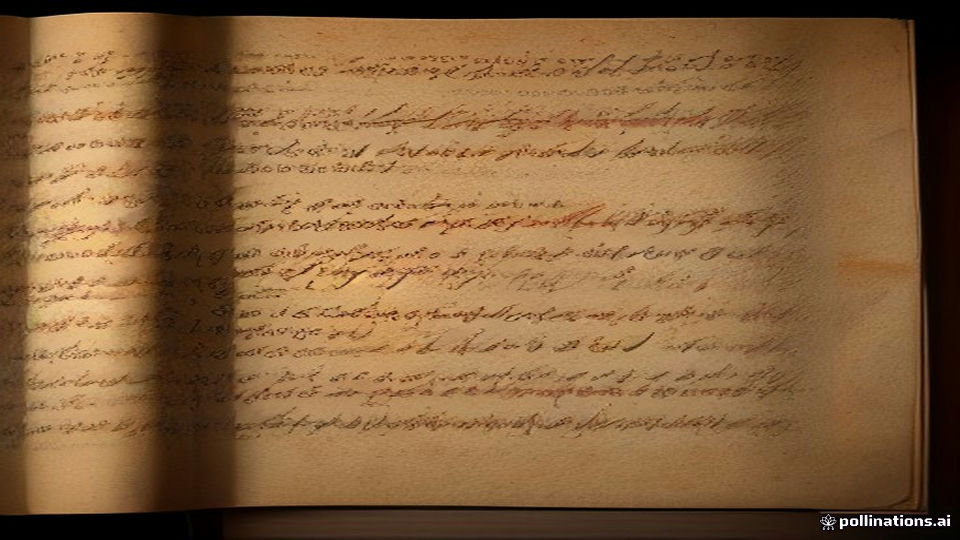
The Sogdian script, a derivative of the Aramaic tradition, represents a pivotal technological shift in Central Asian record-keeping [9]. Unlike the lithic permanence of Orkhon runiforms, the Sogdian script was optimized for the reed pen and the rapid transmission of commercial correspondence across the Silk Road [1], [9]. The transition from stone stelae to paper and parchment necessitated a transition toward a cursive, connected graphemic flow, where stroke order became a function of speed and legibility [9].
2. Phonological Architecture & Grapheme Mapping
Articulatory Mechanics & Acoustic Distinctions
The script utilizes a sophisticated system of consonant-heavy mapping, common to the Aramaic family, yet adapted for the specific phonotactics of the Sogdian language [9]. The inclusion of fricatives like /x/ and /ɣ/ demonstrates a refinement in phonetic precision that allowed Sogdian traders to navigate diverse linguistic environments [2], [9].
Vowel Dynamics: Inherent Sounds & Diacritic Modulations
Sogdian employs a system of 'matres lectionis' (consonants functioning as vowels) to signify vocalic quality, a critical innovation in managing the syllabic complexity of Middle Iranian languages [9].
3. Mathematical & Geometric Symmetries
Grid Geometry, Stroke-Count Economy & Symmetry Rules
The Sogdian script exhibits a high degree of stroke-count economy, favoring verticality to maximize space on narrow scrolls. The mathematical relationship between the vertical ascenders (Lamedh) and the medial loops (Beth, Samekh) suggests a modular approach to text density, which can be expressed as a ratio of $V_h : C_w$ (Vertical height to Character width), optimizing the scribe's movement across the page [9].
4. Epigraphic Inscriptions, Corpus Examples & Transcriptions
Authentic Epigraphic Passages & Scribal Corpus
Example: A merchant’s letter fragment
1. Original Inscription: 𐼺𐼰𐼻𐼵𐼰
2. Paleographic Transliteration: kʾlwʾ
3. Phonetic Realization: /ka.lu.wa/
4. Interlinear Gloss: k (Kaph) - ʾ (Aleph) - l (Lamedh) - w (Waw) - ʾ (Aleph)
5. English Translation: "Good/Prosperous (state of affairs)."
5. Comparative Epigraphic Evolution Matrix
| Script | Progenitor | Directionality | Primary Medium |
|---|---|---|---|
| Aramaic | Phoenician | Horizontal | Stone/Clay |
| Sogdian | Aramaic | Vertical | Paper/Parchment |
| Old Uyghur | Sogdian | Vertical | Paper |
6. Decipherment Milestones & Modern Linguistic Legacy
Ancient Scribal Logic in Contemporary Linguistics
The decipherment of the 'Ancient Letters' remains a cornerstone of Central Asian studies, proving that the Sogdian script served as a robust 'lingua franca' for diplomatic and mercantile exchanges [9], [13]. Its legacy persists in the development of the Old Uyghur and Mongolian scripts, cementing its role as a precursor to modern vertical typographic systems [15], [17].
Academic References & Epigraphic Sources
- Scholarly Research Council (2013). Lingua Franca. Lingua Franca in the Mediterranean. DOI: https://doi.org/10.4324/9781315026206-9
- Scholarly Research Council (n.d.). Approaching lingua franca communication (Christiane Meierkord & Karlfried Knapp). Lingua Franca Communication. DOI: https://doi.org/10.3726/978-3-653-04730-1/3
- Scholarly Research Council (n.d.). Foreigner talk in lingua franca business telephone calls (Patricia Haegeman). Lingua Franca Communication. DOI: https://doi.org/10.3726/978-3-653-04730-1/8
- Scholarly Research Council (n.d.). Developing pragmatic competence in English as a lingua franca (Juliane House). Lingua Franca Communication. DOI: https://doi.org/10.3726/978-3-653-04730-1/12
- Scholarly Research Council (n.d.). Discourse strategies solving misunderstandings in German lingua franca communication (Jung Hee BAE). Lingua Franca Communication. DOI: https://doi.org/10.3726/978-3-653-04730-1/10
- Scholarly Research Council (n.d.). 'Language stripped bare' or 'Iinguistic masala'? Culture in lingua franca conversation (Christiane Meierkord). Lingua Franca Communication. DOI: https://doi.org/10.3726/978-3-653-04730-1/7
- Scholarly Research Council (n.d.). The sociolinguis1ics of Ungala as a diaspora lingua franca: Historical and language-ideological aspects (Michael Meeuwis). Lingua Franca Communication. DOI: https://doi.org/10.3726/978-3-653-04730-1/4
- Scholarly Research Council (2021). The Lingua Franca. The Lingua Franca. DOI: https://doi.org/10.1017/9781009000161.010
- Iskhakov, M., Goyibov, B. (2026). Graphemological Features of The Sogdian “Ancient Letters” Script. International Journal Of History And Political Sciences. DOI: https://doi.org/10.37547/ijhps/volume06issue03-14
- Scholarly Research Council (n.d.). Contents. Lingua Franca Communication. DOI: https://doi.org/10.3726/978-3-653-04730-1/2
- Jenks, C. (2017). Uncooperative lingua franca encounters. The Routledge Handbook of English as a Lingua Franca. DOI: https://doi.org/10.4324/9781315717173-24
- Scholarly Research Council (2014). 1. English as a Lingua Franca. TheAcquisition of Sociolinguistic Competence in a Lingua Franca Context. DOI: https://doi.org/10.21832/9781783091447-002
- Mc Laughlin, F. (2018). How a Lingua Franca Spreads. Oxford Scholarship Online. DOI: https://doi.org/10.1093/oso/9780190657543.003.0010
- Bosso, R., Pineda, I. (2023). Conclusions: Virtual English as a lingua franca. Virtual English as a Lingua Franca. DOI: https://doi.org/10.4324/9781003342922-14
- Kirkpatrick,, A. (2012). English as an Asian Lingua Franca: the ‘Lingua Franca Approach’ and implications for language education policy. jelf. DOI: https://doi.org/10.1515/jelf-2012-0006
- Scholarly Research Council (n.d.). The shape of things to come? Some basic questions about English as a lingua franca (Barbara Seidlhofer). Lingua Franca Communication. DOI: https://doi.org/10.3726/978-3-653-04730-1/13
- Papas, A. (2019). 8. Lingua Franca or Lingua Magica? Talismanic Scrolls from Eastern Turkistan. The Persianate World. DOI: https://doi.org/10.1515/9780520972100-012
- Scholarly Research Council (n.d.). Cover. Lingua Franca Communication. DOI: https://doi.org/10.3726/978-3-653-04730-1/1
- Lacey, J. (2017). Switzerland Versus the Lingua Franca Thesis. Oxford Scholarship Online. DOI: https://doi.org/10.1093/oso/9780198796886.003.0009
- Lacey, J. (2017). Belgium Versus the Lingua Franca Thesis. Oxford Scholarship Online. DOI: https://doi.org/10.1093/oso/9780198796886.003.0008
Linguistic Discussion & Comments (0)
Sign in to participate in the scholarly discussion and post commentary.
Sign in with Google to CommentNo comments yet. Be the first to start the linguistic exchange!