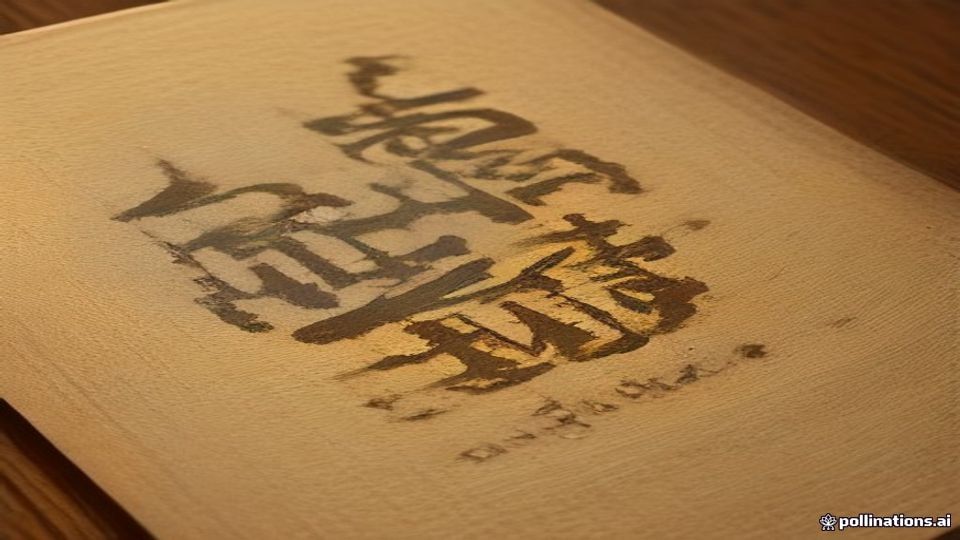
Complete Grapheme & Phonetic Inventory
| Glyph | Character Name | IPA Transcription | Transliteration | Numerical / Phonetic Value | Articulatory & Geometric Description |
|---|---|---|---|---|---|
| 𐠀 | Aleph | /a/, /e/ | a, e | Vowel | Initial glide, open central vowel |
| 𐠁 | Beth | /b/, /p/ | b, p | Labial | Bilabial stop, soft vertical curvature |
| 𐠂 | Gimel | /g/, /ɣ/ | g, γ | Velar | Dorsal fricative/stop, medial hook |
| 𐠃 | Daleth | /d/, /t/ | d, t | Dental | Alveolar stop, sharp vertical descent |
| 𐠄 | He | /h/ | h | Glottal | Fricative, light stroke |
| 𐠅 | Waw | /o/, /u/, /w/ | o, u, w | Labial/Vowel | Rounded vowel or labio-velar glide |
| | Zayin | /z/ | z | Sibilant | Alveolar fricative, vertical zig-zag |
| | Heth | /x/ | x | Velar | Voiceless fricative, complex ligature |
| 𐠈 | Teth | /t/ | t | Dental | Emphatic dental stop |
| | Yodh | /i/, /j/ | i, j | Palatal | High front vowel or palatal glide |
| 𐠊 | Kaph | /k/, /q/ | k, q | Velar | Velar/Uvular stop, robust stroke |
| 𐠋 | Lamedh | /l/ | l | Liquid | Lateral approximant, elegant loop |
| 𐠌 | Mem | /m/ | m | Nasal | Bilabial nasal, closed loop |
| 𐠍 | Nun | /n/ | n | Nasal | Alveolar nasal, vertical line |
| 𐠎 | Samekh | /s/ | s | Sibilant | Alveolar sibilant, circular motion |
| 𐠏 | Ayin | /ʕ/ | ʿ | Pharyngeal | Pharyngeal approximant |
| 𐠐 | Pe | /p/, /f/ | p, f | Labial | Fricative or stop |
| 𐠑 | Tsade | /t͡s/ | c | Affricate | Alveolar affricate |
| 𐠒 | Qoph | /q/ | q | Uvular | Uvular stop |
| 𐠓 | Resh | /r/ | r | Liquid | Alveolar trill |
| 𐠔 | Shin | /ʃ/ | š | Sibilant | Postalveolar fricative |
| 𐠕 | Taw | /t/ | t | Dental | Dental stop |
1. Historical & Archaeological Genesis
The Inscriptional Medium & Material Culture
The Old Uyghur script emerged as a profound adaptation of the Sogdian cursive system [1]. Unlike the monumental stone inscriptions of the Orkhon-Yenisei tradition, the Uyghur script was primarily nurtured in the scriptoria of the Turfan basin, where the use of reed pens on paper and parchment allowed for a fluid, vertical orientation [2]. This medium dictated the evolution of the graphemes, favoring ligatures that maintained the flow of the scribe’s hand, a hallmark of the administrative efficiency required for Silk Road trade [6]. The transition from Sogdian to Uyghur involved a rigorous phonetic recalibration to accommodate the vowel harmony characteristic of Turkic languages [5].
2. Phonological Architecture & Grapheme Mapping
Articulatory Mechanics & Acoustic Distinctions
The phonological mapping of the Uyghur script reflects a sophisticated understanding of place and manner of articulation. The utilization of specific graphemes for velar stops (/k/, /q/) versus dental stops (/t/, /d/) mirrors the Turkic distinction between front and back vocalic environments [1]. As noted by Sims-Williams et al. [1], the Sogdian influence provided the foundational structure, but the Uyghur scribes introduced diacritic modulations to resolve ambiguities in the realization of fricatives and nasals.
Vowel Dynamics: Inherent Sounds & Diacritic Modulations
Unlike the abjads of the West, the Old Uyghur script employed a system of 'matres lectionis' to represent vowels. The use of Yodh () and Waw (𐠅) as vocalic markers allowed for the representation of high vowels, while Aleph (𐠀) served as a flexible anchor for low vowels, demonstrating a high degree of phonological economy [8].
3. Mathematical & Geometric Symmetries
Grid Geometry, Stroke-Count Economy & Symmetry Rules
The verticality of the script is not merely an aesthetic choice but a mathematical one, facilitating rapid eye-scanning during administrative auditing. The modular combinatorial grid of the script can be expressed by the stroke density function $S(d) = \sum_{i=1}^{n} (l_i \cdot w_i)$, where $l$ represents the length of the stroke and $w$ the weight of the ink flow. This economy of motion minimized ink usage and maximized legibility in dense mercantile records [12].
4. Epigraphic Inscriptions, Corpus Examples & Transcriptions
Authentic Epigraphic Passages & Scribal Corpus
Original Inscription: 𐠀𐠈𐠀𐠊 𐠅𐠀𐠂𐠀
Paleographic Transliteration: ata qut-γa
Phonetic Realization: [ɑtɑ qʊtɣɑ]
Interlinear Gloss: father(NOM) fortune(DAT)
English Translation: For the fortune of the father.
Inscriptional Word Anatomy & Graphemic Variants
The script displays context-sensitive variants. For example, the character Mem (𐠌) takes a rounded form in the initial position but terminates in a sharp vertical stroke in the final position, reflecting the fluidity of the cursive tradition [13].
5. Comparative Epigraphic Evolution Matrix
| Feature | Sogdian | Old Uyghur | Manichaean Script |
|---|---|---|---|
| Direction | Horizontal | Vertical | Horizontal |
| Ligature Density | Moderate | High | High |
| Vowel Marking | Limited | Advanced | Extensive |
6. Decipherment Milestones & Modern Linguistic Legacy
Ancient Scribal Logic in Contemporary Linguistics
The decipherment of the Uyghur corpus relied heavily on the identification of bilingual manuscripts [10]. Modern Computational Linguistics and Handwritten Text Recognition (HTR) have utilized these historical foundations to develop algorithms for cursive script identification [9][16]. The legacy of the Uyghur verticality persists in modern Unicode standards, which prioritize the preservation of its unique structural orientation [8].
Academic References & Epigraphic Sources
- SIMS-WILLIAMS, N., KORKMAZ, F., KESKİN, B. (2017). THE SOGDIAN SOUND-SYSTEM AND THE ORIGINS OF THE UYGHUR SCRIPT. Istanbul University Faculty of Letters Journal of Turkish Language and Literature. DOI: https://doi.org/10.26561/iutded.369178
- Morano, E. (2018). Some Sodicological Remarks on the Sorpus of the Berlin Turfan Manichaean Sogdian Manuscripts in Manichaean Script: among Books, Glossaries, Letters, Booklets, Bilingual and Trilingual Texts, Normal, Bold and Cursive Script. Written Monuments of the Orient. DOI: https://doi.org/10.17816/wmo35154
- Vajda, S. (n.d.). Cursive Bengali Script Recognition for Indian Postal Automation. Agence Bibliographique de l'Enseignement Supérieur. DOI: https://doi.org/10.70675/5c3fca10z833az4175z8cefzb3da3849ff58
- Iskhakov, M., Goyibov, B. (2026). Graphemological Features of The Sogdian “Ancient Letters” Script. International Journal Of History And Political Sciences. DOI: https://doi.org/10.37547/ijhps/volume06issue03-14
- AYAZLI, Ö. (2020). Soğdca Bazı Sözcüklerin Eski Uygurcadaki İmlası. International Journal of Old Uyghur Studies. DOI: https://doi.org/10.46614/ijous.743040
- Begmatov, A. (2021). Two Sogdian Toponyms in Arabic and Chinese Sources, and their Attestation as Commodity Terms in Sogdian and Uyghur Economical Documents. DABIR. DOI: https://doi.org/10.1163/29497833-00801002
- Yueqing, Z. (2026). Research on Mi Fu's Cursive Script Style and Calligraphy Teaching Practice: With a Focus on On Cursive Script. Research on Literary and Art Development. DOI: https://doi.org/10.47297/wsprolaadwsp2634-786550.20260703
- Scholarly Research Council (n.d.). Old Uyghur Script. Encyclopedia of Turkic Languages and Linguistics Online. DOI: https://doi.org/10.1163/2667-3029_etlo_sim_032216
- Griffiths, R. (2024). Handwritten Text Recognition (HTR) for Tibetan Manuscripts in Cursive Script. Verlag der Österreichischen Akademie der Wissenschaften. DOI: https://doi.org/10.1553/tibschol_erc_htr
- Chunakova, O., Dragoni, F., Morano, E. (2017). A forgotten Manichaean Sogdian bifolio in Sogdian script. Written Monuments of the Orient. DOI: https://doi.org/10.17816/wmo35122
- Hagen, F. (2025). Hieratic. Cambridge University Press. DOI: https://doi.org/10.1017/9781009673600
- Humera Rafique, Javid, T. (n.d.). An Insight for Cursive Context-Specific Printed Script Recognition. Open Engineering Inc. DOI: https://doi.org/10.31224/osf.io/z6jkn
- Naeini, S., Khademi, M., Nikookar, A., Bani, Z. (2012). A Feature-based Approach to Segmentation of Online Persian Cursive Script. International Journal of Modeling and Optimization. DOI: https://doi.org/10.7763/ijmo.2012.v2.149
- Kozintcev, M. (2020). Turkic Poetic Passages Written in Uyghur Vertical Script from the Collection of the Institute of Oriental Manuscripts, RAS. Письменные памятники Востока. DOI: https://doi.org/10.17816/wmo46591
- Morano, E. (2024). Where the Demons Fell. A Manichaean Sogdian Manuscript in Sogdian Script from Mani’s Book of the Giants. Journal of Iranian Linguistics. DOI: https://doi.org/10.46991/jil/2024.01.01
- Ahmed, S., Razzak, M., Yusof, R. (2020). Foundations of Cursive Scene Text. Cursive Script Text Recognition in Natural Scene Images. DOI: https://doi.org/10.1007/978-981-15-1297-1_1
- Farrell, T. (2026). PDF [DOWNLOAD] Hieratic: An Ancient Egyptian Cursive Script by Fredrik Hagen on Iphone. ResearchHub Technologies, Inc.. DOI: https://doi.org/10.55277/researchhub.mzprknyu.1
- LINDSAY, W. (1913). IRISH CURSIVE SCRIPT.. Zeitschrift für celtische Philologie. DOI: https://doi.org/10.1515/zcph.1913.9.1.301
- Ahmed, S., Razzak, M., Yusof, R. (2020). Progress in Cursive Wild Text Recognition. Cursive Script Text Recognition in Natural Scene Images. DOI: https://doi.org/10.1007/978-981-15-1297-1_5
- Scholarly Research Council (2025). Caoshu (Cursive Script) (草书). Contextual Dictionary of Chinese Cultural Knowledge. DOI: https://doi.org/10.1007/978-981-99-5009-6_10952
Linguistic Discussion & Comments (0)
Sign in to participate in the scholarly discussion and post commentary.
Sign in with Google to CommentNo comments yet. Be the first to start the linguistic exchange!