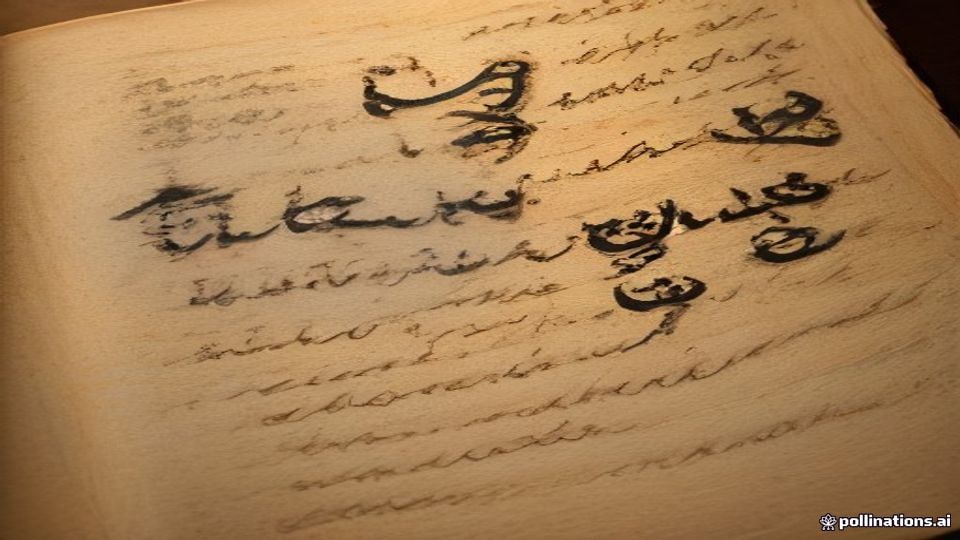
Complete Grapheme & Phonetic Inventory
| Glyph | Character Name | IPA Transcription | Transliteration | Numerical / Phonetic Value | Articulatory & Geometric Description |
|---|---|---|---|---|---|
| 𐤀 | Aleph | /ʔ/ | ʾ | Glottal stop | Vertical stroke with two oblique strokes |
| 𐤁 | Beth | /b/ | b | Voiced bilabial plosive | Open rectangular base with upper hook |
| 𐤂 | Gimel | /ɡ/ | g | Voiced velar plosive | Acute angle resembling a 'v' or 'y' |
| 𐤃 | Daleth | /d/ | d | Voiced alveolar plosive | Triangular head with descending tail |
| 𐤄 | He | /h/ | h | Voiceless glottal fricative | Vertical staff with three horizontal prongs |
| 𐤅 | Waw | /w/ | w | Labio-velar approximant | Vertical staff with inverted 'y' top |
| 𐤆 | Zayin | /z/ | z | Voiced alveolar fricative | Vertical staff with cross-bars |
| 𐤇 | Heth | /ħ/ | ḥ | Voiceless pharyngeal fricative | Double-barred ladder structure |
| 𐤈 | Teth | /tˤ/ | ṭ | Emphatic dental plosive | Circle intersected by a cross |
| 𐤉 | Yodh | /j/ | y | Palatal approximant | Zig-zag or hook form |
| 𐤊 | Kaph | /k/ | k | Voiceless velar plosive | Three-stroke angular structure |
| 𐤋 | Lamedh | /l/ | l | Alveolar lateral | Shepherd's crook or hook |
| 𐤌 | Mem | /m/ | m | Bilabial nasal | Wavy line representing water |
| 𐤍 | Nun | /n/ | n | Alveolar nasal | Vertical stroke with descending hook |
| 𐤎 | Samekh | /s/ | s | Voiceless alveolar fricative | Vertical spine with horizontal bars |
| 𐤏 | Ayin | /ʕ/ | ʿ | Voiced pharyngeal fricative | Circular or elliptical form |
| 𐤐 | Pe | /p/ | p | Voiceless bilabial plosive | Angular head with downward stroke |
| 𐤑 | Sade | /sˤ/ | ṣ | Emphatic sibilant | Vertical line with cross-bar |
| 𐤒 | Qoph | /q/ | q | Voiceless uvular plosive | Circle with bisecting vertical line |
| 𐤓 | Resh | /r/ | r | Alveolar trill | Triangular head with short tail |
| 𐤔 | Shin | /ʃ/ | š | Voiceless postalveolar fricative | W-shaped tricursal structure |
| 𐤕 | Taw | /t/ | t | Voiceless dental plosive | X-shaped intersection |
1. Historical & Archaeological Genesis
The Inscriptional Medium & Material Culture
The Phoenician script emerged from the necessity of rapid commercial accounting within the Canaanite trade networks [16]. Unlike the cumbersome cuneiform of the Mesopotamian hegemony, the Phoenician system utilized a linear, simplified aesthetic [10]. Epigraphic evidence suggests that the transition from stylus-on-clay to chisel-on-stone and reed-on-papyrus mandated a shift toward angular, stroke-efficient geometries [17]. The physical medium dictated the 'ductus'—the order and direction of strokes—which allowed for rapid record-keeping in the maritime trade routes that defined the Mediterranean economy [16].
2. Phonological Architecture & Grapheme Mapping
Articulatory Mechanics & Acoustic Distinctions
The Phoenician system is a pure abjad, focusing exclusively on consonantal phonemes [12]. By mapping the 22 core sounds of the Canaanite dialect, the script achieved a mathematical economy that eliminated the redundancy of syllabic or logographic systems [13]. The articulation of emphatic consonants like /ṭ/ and /ṣ/ required distinct geometric markers, differentiating them from their plain counterparts [13].
3. Mathematical & Geometric Symmetries
Grid Geometry, Stroke-Count Economy & Symmetry Rules
Each grapheme was constructed within a modular grid, often constrained by a 3-to-4 stroke limit to ensure rapid legibility [14]. The geometric evolution displays a clear movement toward axial symmetry, reducing cognitive load during the scribal process [19]. The script can be modeled through combinatorial matrices where the intersection points of strokes define the phonetic identity of the character.
4. Epigraphic Inscriptions, Corpus Examples & Transcriptions
Authentic Epigraphic Passages & Scribal Corpus
Sample: A Phoenician Votive Dedication
1. Original Inscription: 𐤋𐤀𐤃𐤍𐤍 𐤋𐤁𐤏𐤋 𐤑𐤃𐤍
2. Paleographic Transliteration: lʾdnn lbʿl ṣdn
3. Phonetic Realization: /laʔadōnōn libaʿal ṣīdōn/
4. Interlinear Gloss: to-our-lord / to-Baal / of-Sidon
5. English Translation: To our lord, to the Baal of Sidon.
5. Comparative Epigraphic Evolution Matrix
| Script | Ancestry | Directionality | Grapheme Count |
|---|---|---|---|
| Proto-Sinaitic | Hieroglyphic | Variable | ~30 |
| Phoenician | Proto-Sinaitic | Right-to-Left | 22 |
| Greek | Phoenician | Left-to-Right | 24+ |
| Aramaic | Phoenician | Right-to-Left | 22 |
6. Decipherment Milestones & Modern Linguistic Legacy
Ancient Scribal Logic in Contemporary Linguistics
The decipherment of Phoenician was facilitated by bilingual inscriptions that linked the script to Greek and Punic counterparts [10]. This democratization of literacy, as explored by the Scholarly Research Council [8], allowed for the dissemination of information beyond the priestly or royal castes. Its legacy persists in the Unicode encoding of modern Semitic languages and the typographic foundations of the Western world [19].
Academic References & Epigraphic Sources
- Scholarly Research Council (2025). Maya Glyphs. The Writing Revolution. DOI: https://doi.org/10.1002/9781394218226.ch5
- Scholarly Research Council (2008). Maya Glyphs: Calendars of Kings. The Writing Revolution. DOI: https://doi.org/10.1002/9781444304671.ch5
- Byers, M. (2018). Thrown Down Glyphs. Oxford Scholarship Online. DOI: https://doi.org/10.1093/oso/9780198813255.003.0005
- Zhong, Q. (2017). Synchronized and Democratized Smart Grids To Underpin The Third Industrial Revolution. IFAC-PapersOnLine. DOI: https://doi.org/10.1016/j.ifacol.2017.08.699
- Scholarly Research Council (2016). Glyphs: Part 1. University of Illinois. DOI: https://doi.org/10.4135/9781529773040
- Scholarly Research Council (n.d.). Glyphs. SpringerReference. DOI: https://doi.org/10.1007/springerreference_64991
- Scholarly Research Council (2016). John Hart Discusses the Use of Glyphs in Charts. Glyphs: Part 1. DOI: https://doi.org/10.4135/9781529773040.n1
- Scholarly Research Council (2023). democratized, adj.. Oxford English Dictionary. DOI: https://doi.org/10.1093/oed/1067839188
- Scholarly Research Council (2016). Glyphs: Part 2. University of Illinois. DOI: https://doi.org/10.4135/9781529773057
- López-Ruiz, C. (2019). Phoenician Literature. The Oxford Handbook of the Phoenician and Punic Mediterranean. DOI: https://doi.org/10.1093/oxfordhb/9780190499341.013.18
- Hutchinson, A. (2008). The Province of The Judiciary Democratized. The Province of Jurisprudence Democratized. DOI: https://doi.org/10.1093/acprof:oso/9780195343250.003.0008
- Scholarly Research Council (2023). consonantal, adj.. Oxford English Dictionary. DOI: https://doi.org/10.1093/oed/5377556052
- Hasselbach, R. (2013). Phoenician Case in Typological Context. Linguistic Studies in Phoenician. DOI: https://doi.org/10.5325/j.ctv1bxgz3w.14
- Yost, B., North, C. (2005). Single complex glyphs versus multiple simple glyphs. CHI '05 Extended Abstracts on Human Factors in Computing Systems. DOI: https://doi.org/10.1145/1056808.1057048
- Scholarly Research Council (1998). BIBLIOGRAPHY TO PHOENICIAN WOMEN. Euripides: Phoenician Women. DOI: https://doi.org/10.2307/jj.38238829.6
- Regev, D. (2021). Painting the Mediterranean Phoenician: On Canaanite-Phoenician Trade-nets. Equinox Publishing Ltd.. DOI: https://doi.org/10.1558/isbn.9781781798270
- Gubel, E. (2003). Phoenician. Oxford Art Online. DOI: https://doi.org/10.1093/gao/9781884446054.article.t067098
- Scholarly Research Council (1982). Introduction. Maya Glyphs. DOI: https://doi.org/10.7560/750661-003
- Scholarly Research Council (1982). Frontmatter. Maya Glyphs. DOI: https://doi.org/10.7560/750661-fm
- Scholarly Research Council (n.d.). Information technology. An operational model for characters and glyphs. BSI British Standards. DOI: https://doi.org/10.3403/01522388
Linguistic Discussion & Comments (0)
Sign in to participate in the scholarly discussion and post commentary.
Sign in with Google to CommentNo comments yet. Be the first to start the linguistic exchange!