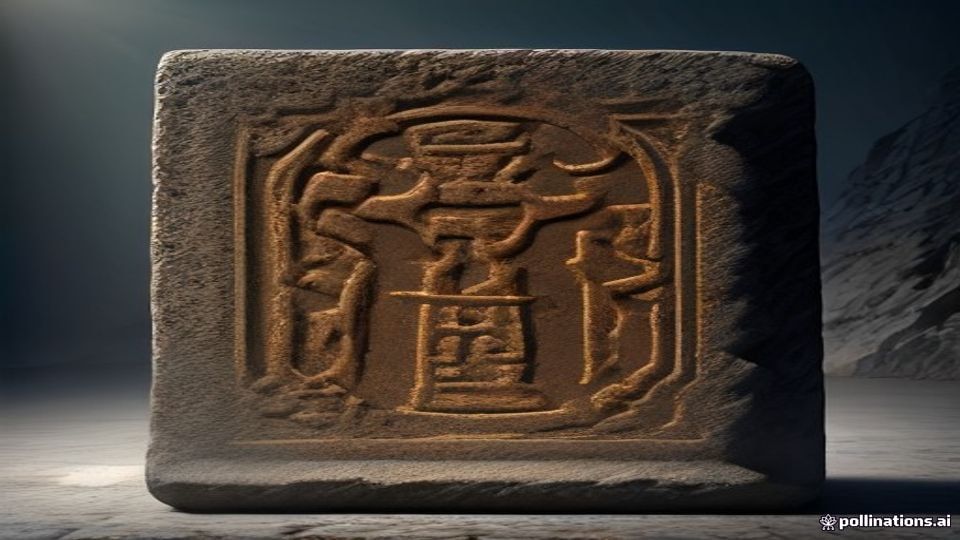
Complete Grapheme & Phonetic Inventory
| Glyph | Character Name | IPA Transcription | Transliteration | Numerical / Phonetic Value | Articulatory & Geometric Description |
|---|---|---|---|---|---|
| 𐰀 | A | /a/ | a | Vowel | Open central unrounded vowel; vertical axis stroke |
| 𐰁 | A | /a/ | a | Vowel | Variant for back-vocalic contexts |
| 𐰂 | Ä | /æ/ | ä | Vowel | Front-vocalic variant |
| 𐰃 | Ä | /æ/ | ä | Vowel | Front-vocalic variant |
| 𐰄 | I/İ | /i/ | i/ı | Vowel | High front/back vowel |
| 𐰅 | E | /e/ | e | Vowel | Mid-front unrounded vowel |
| 𐰆 | O/U | /o/ /u/ | o/u | Vowel | High/mid back rounded vowel |
| 𐰇 | Ö/Ü | /ø/ /y/ | ö/ü | Vowel | High/mid front rounded vowel |
| 𐰈 | O/U | /o/ /u/ | o/u | Vowel | Rounded vowel variant |
| 𐰊 | B (back) | /b/ | b | Consonant | Bilabial plosive; angular base |
| 𐰋 | B (front) | /b/ | b | Consonant | Bilabial plosive |
| 𐰑 | D (back) | /d/ | d | Consonant | Dental plosive |
| 𐰒 | D (front) | /d/ | d | Consonant | Dental plosive |
| 𐰎 | G (back) | /g/ | g | Consonant | Velar plosive |
| 𐰏 | G (front) | /g/ | g | Consonant | Velar plosive |
| 𐰍 | Ğ (back) | /ɣ/ | ğ | Consonant | Velar fricative |
| 𐰎 | Ğ (front) | /ɣ/ | ğ | Consonant | Velar fricative |
| 𐰐 | P | /p/ | p | Consonant | Bilabial voiceless plosive |
| 𐰑 | Q (back) | /q/ | q | Consonant | Uvular plosive |
| 𐰒 | Q (front) | /q/ | q | Consonant | Uvular plosive |
| 𐰓 | S (front) | /s/ | s | Consonant | Alveolar fricative |
| 𐰔 | S (back) | /s/ | s | Consonant | Alveolar fricative |
| 𐰕 | Z | /z/ | z | Consonant | Alveolar voiced fricative |
| 𐰖 | Š | /ʃ/ | ş | Consonant | Post-alveolar fricative |
| 𐰗 | L (back) | /l/ | l | Consonant | Lateral liquid |
| 𐰘 | L (front) | /l/ | l | Consonant | Lateral liquid |
| 𐰙 | N (back) | /n/ | n | Consonant | Alveolar nasal |
| 𐰚 | N (front) | /n/ | n | Consonant | Alveolar nasal |
| 𐰛 | Ng | /ŋ/ | ng | Consonant | Velar nasal |
| 𐰜 | M | /m/ | m | Consonant | Bilabial nasal |
| 𐰝 | T (back) | /t/ | t | Consonant | Dental plosive |
| 𐰞 | T (front) | /t/ | t | Consonant | Dental plosive |
| 𐰟 | R (back) | /r/ | r | Consonant | Alveolar trill |
| 𐰠 | R (front) | /r/ | r | Consonant | Alveolar trill |
| 𐰡 | Y (back) | /j/ | y | Consonant | Palatal approximant |
| 𐰢 | Y (front) | /j/ | y | Consonant | Palatal approximant |
| 𐰣 | K (back) | /k/ | k | Consonant | Velar plosive |
| 𐰤 | K (front) | /k/ | k | Consonant | Velar plosive |
| 𐰥 | Č | /tʃ/ | ç | Consonant | Affricate |
| 𐰦 | NT (back) | /nt/ | nt | Cluster | Nasal-plosive sequence |
| 𐰧 | ND (back) | /nd/ | nd | Cluster | Nasal-plosive sequence |
| 𐰨 | NČ | /ntʃ/ | nç | Cluster | Nasal-affricate sequence |
| 𐰩 | NZ | /nz/ | nz | Cluster | Nasal-fricative sequence |
| 𐰪 | LD | /ld/ | ld | Cluster | Lateral-plosive sequence |
| 𐰫 | LT | /lt/ | lt | Cluster | Lateral-plosive sequence |
| 𐰬 | LK | /lk/ | lk | Cluster | Lateral-plosive sequence |
| 𐰭 | Q | /q/ | q | Consonant | Uvular plosive variant |
1. Historical & Archaeological Genesis
The Inscriptional Medium & Material Culture
The Orkhon inscriptions, primarily carved into massive granite stelae, represent a sophisticated fusion of nomadic aesthetics and monumental permanence [1]. The choice of hard stone, specifically granite, necessitated a specific epigraphic style: angular, vertical, and horizontal strokes that minimized the risk of stone chipping, a hallmark of the 'epigraphic habit' [8], [18]. Unlike the fluid, cursive traditions of the Sogdian or Manichaean scripts, the Orkhon runes—often termed 'Turkic Runiform'—were designed for the chisel [7]. The physical interaction between the iron stylus and the stone surface dictated a geometric economy where curves are avoided in favor of intersecting lines, creating a visual rhythm that correlates with the rhythmic nature of Old Turkic speech [6], [14].
2. Phonological Architecture & Grapheme Mapping
Articulatory Mechanics & Acoustic Distinctions
The script is a masterclass in phonetic engineering, utilizing distinct graphemes to account for the front and back vocalic harmony inherent in Old Turkic [6]. This system effectively doubles the consonant inventory to signal the acoustic environment of the following vowel, a feature that distinguishes it from purely alphabetic systems [14]. For instance, the use of separate glyphs for back-vocalic /k/ (𐰶) and front-vocalic /k/ (𐰸) ensures that the phonological structure is preserved in the orthography [4].
Vowel Dynamics: Inherent Sounds & Diacritic Modulations
Vowel harmony acts as the primary constraint on the script's combinatorial logic. Scribes utilized a system of vowel-consonant pairing that reduced the need for explicit vowel notation in medial positions, relying instead on the inherent phonetic value of the preceding or following consonant glyph [6].
3. Mathematical & Geometric Symmetries
Grid Geometry, Stroke-Count Economy & Symmetry Rules
The script exhibits a rigorous adherence to a modular grid. Most glyphs are composed of 1 to 4 strokes, adhering to a principle of stroke-count economy designed to expedite the carving process on monumental surfaces [7]. We can define the complexity of a glyph $G$ as a function of its stroke count $S$ and rotational symmetry $R$:
$$C(G) = \sum_{i=1}^{n} S_i \cdot R_i$$
Where $R$ represents the degree of axial symmetry. The Orkhon system prioritizes verticality, with characters typically occupying a uniform rectangular space, facilitating rapid reading and consistent alignment across the face of the stele [10].
4. Epigraphic Inscriptions, Corpus Examples & Transcriptions
Authentic Epigraphic Passages & Scribal Corpus
Original Inscription: 𐱅𐰭𐰼𐰃 𐱅𐰏𐰼𐰃 𐱅𐰇𐰼𐰚 𐰉𐰆𐰑𐰣
- Original Inscription: 𐱅𐰭𐰼𐰃 𐱅𐰏𐰼𐰃 𐱅𐰇𐰼𐰚 𐰉𐰆𐰑𐰣
- Paleographic Transliteration: teŋri tegrü türk budun
- Phonetic Realization: /teŋri teɡry tyrk budun/
- Interlinear Gloss: Heaven-like Heaven Turk people
- English Translation: The Heaven-like, Heaven-born Turk people.
Inscriptional Word Anatomy & Graphemic Variants
- Word: 𐰋𐰃𐰠𐰏𐰀 (Bilge)
- Anatomy: 𐰋 (B-front) + 𐰃 (i) + 𐰠 (L-front) + 𐰏 (G-front) + 𐰀 (a)
- Note: The front-vocalic series is strictly maintained here to match the /i/ and /æ/ phonemes [6], [14].
5. Comparative Epigraphic Evolution Matrix
| Script | Origin | Direction | Phonetic Logic |
|---|---|---|---|
| Orkhon | Aramaic-derivative (disputed) | Vertical/Horizontal | Vowel Harmony-based |
| Sogdian | Aramaic | Cursive/Vertical | Syllabic-Alphabetic |
| Old Uyghur | Sogdian | Vertical | Adaptive-Alphabetic |
6. Decipherment Milestones & Modern Linguistic Legacy
Ancient Scribal Logic in Contemporary Linguistics
The decipherment of the Orkhon inscriptions by Vilhelm Thomsen in 1893 remains one of the greatest achievements in historical linguistics, relying on the identification of the repeated word 'Tengri' and the bilingual nature of the context provided by Chinese historiography [9], [15]. Today, the Orkhon script is recognized not merely as a precursor to later Turkic literacy but as a sophisticated encoding system that anticipated modern phonetic principles [11]. Its integration into Unicode as 'Old Turkic' has revitalized scholarly interest in its geometric properties and its role in the administrative unification of the Central Asian steppe [4], [7].
Academic References & Epigraphic Sources
- Sharifova, S. (2022). Scientific debate about the genre of the Orkhon-Yenisei inscriptions. Turkic Studies Journal. DOI: https://doi.org/10.32523/2664-5157-2021-4-98-111
- ŞENGÜL, F. (2021). Reinterpretation of Ötükän Yıš Expression in Orkhon Inscriptions. Journal of Old Turkic Studies. DOI: https://doi.org/10.35236/jots.964822
- POLAT, H. (2019). Orhun Yazıtlarındaki Durum Eklerinin Sentaktik İşlevleri Üzerine. Journal of Old Turkic Studies. DOI: https://doi.org/10.35236/jots.577401
- Scholarly Research Council (n.d.). B. OLD TURKIC (OLD AND MIDDLE UIGUR, ORKHON, AND YENISEI). The Turkic Languages and Literatures of Central Asia. DOI: https://doi.org/10.1515/9783110815207.26
- Demirbilek, S. (2018). Sun Zi’nin Savaş Sanatı ile Orhon Yazıtları Arasındaki İlişki Üzerine. Journal of Old Turkic Studies. DOI: https://doi.org/10.35236/jots.386893
- Gotz, M., Tekin, T. (1974). A Grammar of Orkhon Turkic. Oriens. DOI: https://doi.org/10.2307/1580168
- Savelyev, A., Svoyskiy, Y., Chernukhina, A. (2025). Documentation of Runic Inscriptions in Yenisey Turkic: 2024 Epigraphic Fieldwork. Contemporary Studies in Linguistics I. DOI: https://doi.org/10.7816/imuling-15-2025-01x016
- Bodel, J. (2023). Epigraphic Culture and the Epigraphic Mode. Inscriptions and the Epigraphic Habit. DOI: https://doi.org/10.1163/9789004683129_002
- Usman, A. (2018). The Orkhon inscriptions. Encyclopedia of Romantic Nationalism in Europe. DOI: https://doi.org/10.5117/9789462981188/ngxe3p76jxut0ikuqy8t9ewh
- Scholarly Research Council (n.d.). Introduction : Elegiac Inscriptions and the 'Epigraphic Habit'. Textual Permanence : Roman Elegists and Epigraphic Tradition. DOI: https://doi.org/10.5040/9781472540225.0006
- AYDIN, M. (2023). Mihrigül Helil. 鄂尔浑文回鹘碑铭研究 [Orkhon Inscriptions of the Uyghur Kaghanate]. Beijing: China Social Sciences Press, 2022, pp. 337. ISBN: 978-7-5203-9829-9.. Journal of Old Turkic Studies. DOI: https://doi.org/10.35236/jots.1220871
- Meyer, E. (2023). Conclusion: Epigraphic Habits and Epigraphic Communities. Inscriptions and the Epigraphic Habit. DOI: https://doi.org/10.1163/9789004683129_019
- Zerhoch, S. (2023). A Deceptively Simple Ritual: Libation in Greek Inscriptions. Inscriptions and the Epigraphic Habit. DOI: https://doi.org/10.1163/9789004683129_007
- Götz, M. (1971). Talât Tekin, A Grammar of Orkhon Turkic.. Oriens. DOI: https://doi.org/10.1163/18778372-02302401070
- Kordoses, S. (2009). Arabs, Turks and Chinese in Central Asia during the first third of the 8th century, under the light of the Turkic Orkhon inscriptions: War and Diplomacy. East and West. DOI: https://doi.org/10.31826/9781463216771-003
- Scholarly Research Council (n.d.). Chios. Inscriptions and epigraphic research.. Supplementum Epigraphicum Graecum Online. DOI: https://doi.org/10.1163/1874-6772_seg_a56_993
- Sancinito, J. (2023). Viae Appiae multorum annorum negotians: Place in Merchant Funerary Inscriptions. Inscriptions and the Epigraphic Habit. DOI: https://doi.org/10.1163/9789004683129_011
- Benefiel, R., M. Keesling, C. (2023). Inscriptions and the Epigraphic Habit. BRILL. DOI: https://doi.org/10.1163/9789004683129
- Scholarly Research Council (n.d.). SEG 63-18. Athens. Inscriptions: Athenian epigraphic habit.. Supplementum Epigraphicum Graecum. DOI: https://doi.org/10.1163/1874-6772_seg_a63_18
- Scholarly Research Council (n.d.). Naso’s Inscriptions. Textual Permanence : Roman Elegists and Epigraphic Tradition. DOI: https://doi.org/10.5040/9781472540225.ch-004
Linguistic Discussion & Comments (0)
Sign in to participate in the scholarly discussion and post commentary.
Sign in with Google to CommentNo comments yet. Be the first to start the linguistic exchange!