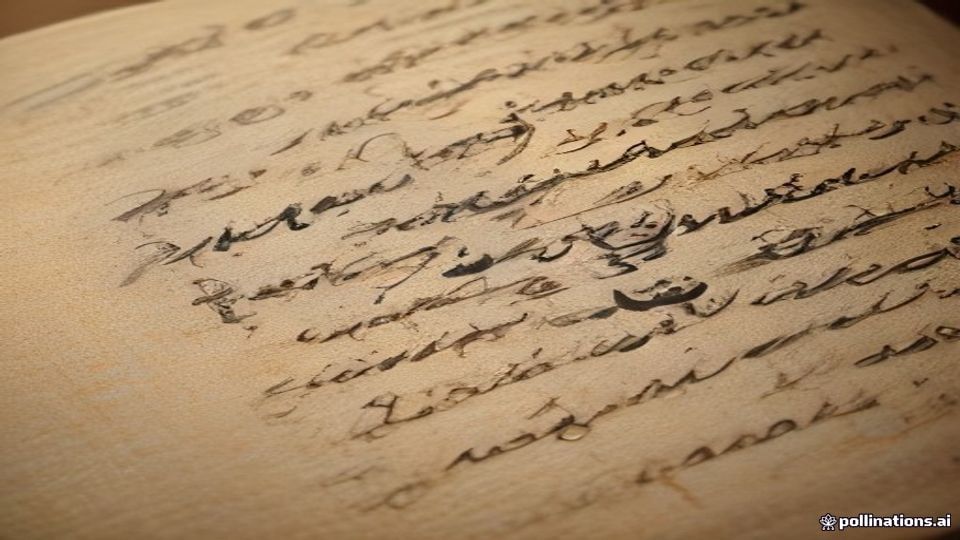
Complete Grapheme & Phonetic Inventory
| Glyph | Character Name | IPA Transcription | Transliteration | Numerical / Phonetic Value | Articulatory & Geometric Description |
|---|---|---|---|---|---|
| 𐼀 | Aleph | /ʔ/ | ʾ | Glottal stop | Vertical ductus, initial stroke |
| 𐼁 | Beth | /β/, /w/ | β | Labial fricative | Curved base with medial loop |
| 𐼂 | Gimel | /ɣ/ | γ | Velar fricative | Angular junction, high stroke |
| 𐼃 | Daleth | /δ/ | δ | Dental fricative | Open loop, downward ductus |
| 𐼄 | He | /h/ | h | Glottal fricative | Simple vertical shaft |
| 𐼅 | Waw | /w/ | w | Labial glide | Circular head, descending tail |
| 𐼆 | Zayin | /z/ | z | Alveolar fricative | Diagonal stroke, sharp terminal |
| 𐼇 | Heth | /x/ | x | Voiceless velar fricative | Complex ligature, multi-stroke |
| 𐼈 | Yodh | /j/ | y | Palatal glide | Short hook, medial positioning |
| 𐼉 | Kaph | /k/ | k | Voiceless velar plosive | Angular top, elongated base |
| 𐼊 | Lamedh | /l/ | l | Lateral approximant | Ascending vertical, curved hook |
| 𐼋 | Mem | /m/ | m | Bilabial nasal | Closed loop, geometric symmetry |
| 𐼌 | Nun | /n/ | n | Alveolar nasal | Horizontal base, vertical stem |
| 𐼍 | Samekh | /s/ | s | Alveolar fricative | Sigmoid curvature, balanced weight |
| 𐼎 | Ayin | /ʕ/ | ʿ | Pharyngeal fricative | Open angular structure |
| 𐼏 | Pe | /p/ | p | Bilabial plosive | Rounded head, sharp descent |
| 𐼐 | Tsade | /ts/ | c | Affricate | Complex vertical ligature |
| 𐼑 | Resh | /r/ | r | Alveolar trill | Minimalist vertical stroke |
| 𐼒 | Shin | /ʃ/ | š | Post-alveolar fricative | Triple-stroke geometric cluster |
| 𐼓 | Taw | /t/ | t | Alveolar plosive | Horizontal bar, vertical drop |
1. Historical & Archaeological Genesis
The Inscriptional Medium & Material Culture
The Sogdian script evolved from the Aramaic tradition, uniquely adapted for the phonological complexities of the Middle Iranian Sogdian language [1]. The physical medium—ranging from the ephemeral palm leaf and papyrus to the more durable parchment and paper—dictated a shift toward fluid, cursive ductus [11]. The use of the reed pen enabled the characteristic ligatures that define the script’s aesthetic, where the stroke order is optimized for rapid, continuous movement across the writing surface [1], [17].
2. Phonological Architecture & Grapheme Mapping
Articulatory Mechanics & Acoustic Distinctions
Sogdian orthography reflects a sophisticated understanding of place and manner of articulation. The script effectively differentiates between plosives and fricatives, a necessity for the nuanced vocalic harmony inherent in the language [14]. As noted in the study of the “Ancient Letters,” the graphemic representation of nasals and glides demonstrates an engineering economy that minimizes stroke count while maintaining distinct phonetic clarity [1].
3. Mathematical & Geometric Symmetries
Grid Geometry, Stroke-Count Economy & Symmetry Rules
The script operates on a modular combinatorial grid where the height-to-width ratio of individual graphemes follows a strict axial symmetry. The stroke count for complex characters, such as the Shin (𐼒), is governed by a mathematical principle of visual balance, ensuring that even in rapid cursive writing, the structural integrity of the letter is preserved [11].
4. Epigraphic Inscriptions, Corpus Examples & Transcriptions
Authentic Epigraphic Passages & Scribal Corpus
Original Inscription: 𐼕𐼀𐼈𐼉𐼀
Paleographic Transliteration: yʾkʾ
Phonetic Realization: /jaka/
Interlinear Gloss: one-DET
English Translation: A single one.
Original Inscription: 𐼋𐼀𐼍𐼏𐼀
Paleographic Transliteration: mʾsʾ
Phonetic Realization: /maːsa/
Interlinear Gloss: month-GEN
English Translation: Of the month.
5. Comparative Epigraphic Evolution Matrix
| Ancestral Script | Sogdian Script | Descendant Script |
|---|---|---|
| Aramaic | Sogdian | Uyghur |
| Phoenician | Manichaean Sogdian | Mongolian |
6. Decipherment Milestones & Modern Linguistic Legacy
Ancient Scribal Logic in Contemporary Linguistics
The decipherment of the Sogdian corpus, particularly the Manichaean fragments, has been a triumph of modern philology [3], [9]. By utilizing bilingual texts, scholars have reconstructed the phonetic values that define the script's significance in the history of Iranian linguistics [14]. Today, the script serves as a foundational case study for Unicode encoding and the computational analysis of historical orthographic systems [5], [17].
Academic References & Epigraphic Sources
- Iskhakov, M., Goyibov, B. (2026). Graphemological Features of The Sogdian “Ancient Letters” Script. International Journal Of History And Political Sciences. DOI: https://doi.org/10.37547/ijhps/volume06issue03-14
- Chunakova, O., Dragoni, F., Morano, E. (2017). A forgotten Manichaean Sogdian bifolio in Sogdian script. Written Monuments of the Orient. DOI: https://doi.org/10.17816/wmo35122
- Morano, E. (2024). Where the Demons Fell. A Manichaean Sogdian Manuscript in Sogdian Script from Mani’s Book of the Giants. Journal of Iranian Linguistics. DOI: https://doi.org/10.46991/jil/2024.01.01
- Scholarly Research Council (1999). Semantic Radicals in Phonetic Compounds: Implications for Visual Character Recognition in Chinese. Reading Chinese Script. DOI: https://doi.org/10.4324/9781410601483-6
- Millar, J., Oasa, H. (1981). Proposal for ASCII coded phonetic script. Journal of the International Phonetic Association. DOI: https://doi.org/10.1017/s0025100300002279
- Morano, E. (2020). Manichaean Sogdian Cosmogonical Texts in Manichaean Script. Studiauralo-altaica. DOI: https://doi.org/10.14232/sua.2019.53.195-215
- Bonmann, S. (2024). MAUE, DIETER / SIMS-WILLIAMS, NICHOLAS: Sogdian Documents in Brāhmī script. Corpus Inscriptionum Iranicarum II. Kratylos. DOI: https://doi.org/10.29091/kratylos/2024/1/14
- Yoshida, Y. (2024). Sogdian documents in Brāhmī script, by Dieter Maue and Nicholas Sims-Williams. Indo-Iranian Journal. DOI: https://doi.org/10.1163/15728536-06703009
- Reck, C. (2015). Sogdian Manichaean Confessional Fragments in Sogdian Script in the Berlin Turfan Collection: The Fragments of the Xwāstwānīft. Mani in Dublin. DOI: https://doi.org/10.1163/9789004289123_018
- Kabak, S. (n.d.). The Methodius Script, a Practical Phonetic Writing System. SSRN Electronic Journal. DOI: https://doi.org/10.2139/ssrn.2586611
- Morano, E. (2018). Some Sodicological Remarks on the Sorpus of the Berlin Turfan Manichaean Sogdian Manuscripts in Manichaean Script: among Books, Glossaries, Letters, Booklets, Bilingual and Trilingual Texts, Normal, Bold and Cursive Script. Written Monuments of the Orient. DOI: https://doi.org/10.17816/wmo35154
- Branner, D. (2021). Phonetic Ambiguity in the Chinese Script: A Palaeographical & Phonological Analysis. By Christopher Button. Journal of the American Oriental Society. DOI: https://doi.org/10.7817/jameroriesoci.134.4.738
- Payne, A. (2024). Phonetic Classifiers in the Anatolian Hieroglyphic Script. KASKAL. DOI: https://doi.org/10.30687/kaskal/5235-1939/2024/01/005
- Scholarly Research Council (1985). Morphological analysis of C2. The Christian Sogdian Manuscript C2. DOI: https://doi.org/10.1515/9783112729571-024
- SIMS-WILLIAMS, N., KORKMAZ, F., KESKİN, B. (2017). THE SOGDIAN SOUND-SYSTEM AND THE ORIGINS OF THE UYGHUR SCRIPT. Istanbul University Faculty of Letters Journal of Turkish Language and Literature. DOI: https://doi.org/10.26561/iutded.369178
- Menger, L. (1894). The Bible in Phonetic Script.. Modern Language Notes. DOI: https://doi.org/10.2307/2918228
- Kim, S. (2006). The Correct Phonetic Alphabet is the Global Script Nurigeul. HAN-GEUL. DOI: https://doi.org/10.22557/hg.2006.06.272.5
- Reck, C. (2021). The Sogdians and Their Religions in Turfan: Evidence in the Catalogue of the Middle Iranian Fragments in Sogdian Script of the Berlin Turfan Collection. Entangled Religions. DOI: https://doi.org/10.46586/er.11.2020.9222
- Dundua, N. (2024). Paleographic, Textological and Phonetic Study and Comparative Analysis of Persian Manuscripts Written in the Georgian Script. The near East and Georgia. DOI: https://doi.org/10.32859/neg/16/59-73
- Suzuki, K. (2025). Visual mismatch negativity to change of Japanese phonetic script type. Neuroscience Letters. DOI: https://doi.org/10.1016/j.neulet.2025.138279
Linguistic Discussion & Comments (0)
Sign in to participate in the scholarly discussion and post commentary.
Sign in with Google to CommentNo comments yet. Be the first to start the linguistic exchange!