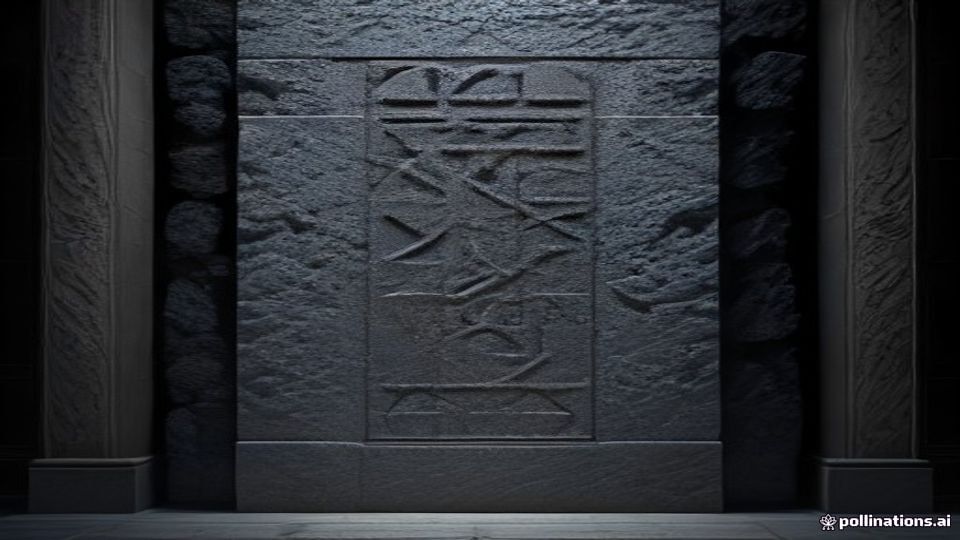
Complete Grapheme & Phonetic Inventory
| Glyph | Character Name | IPA Transcription | Transliteration | Numerical / Phonetic Value | Articulatory & Geometric Description |
|---|---|---|---|---|---|
| 𐰔 | Yenisei Z | /z/ | z | Consonant | Fricative, alveolar; angular vertical stroke |
| 𐰘 | Yenisei Y | /j/ | y | Consonant | Palatal approximant; bifurcated geometric form |
| 𐰕 | Yenisei Z2 | /z/ | z² | Consonant | Variant of alveolar fricative; closed symmetry |
| 𐰙 | Yenisei Y2 | /j/ | y² | Consonant | Palatal variant; mirrored stroke geometry |
| 𐰠 | Yenisei L | /l/ | l | Consonant | Lateral liquid; open-angle construct |
| 𐰡 | Yenisei L2 | /l/ | l² | Consonant | Lateral variant; high-stroke density |
| 𐰦 | Yenisei NT | /nt/ | nt | Consonant | Nasal-plosive cluster; modular block |
| 𐰨 | Yenisei NCH | /ntʃ/ | nç | Consonant | Affricate; complex diagonal intersection |
| 𐰪 | Yenisei NJ | /ɲ/ | nj | Consonant | Palatal nasal; elongated vertical axis |
| 𐰬 | Yenisei NG | /ŋ/ | ñ | Consonant | Velar nasal; stroke-count economy |
| 𐰮 | Yenisei H | /h/ | h | Consonant | Glottal fricative; minimalist linear form |
| 𐰯 | Yenisei P | /p/ | p | Consonant | Bilabial plosive; angular arc |
| 𐰰 | Yenisei V | /v/ | v | Consonant | Labiodental; geometric symmetry |
| 𐰱 | Yenisei CH | /tʃ/ | ç | Consonant | Affricate; balanced terminal serif |
| 𐰲 | Yenisei B | /b/ | b | Consonant | Bilabial plosive; heavy base weight |
1. Historical & Archaeological Genesis
The Inscriptional Medium & Material Culture
The Yenisei inscriptions, primarily found on funerary stelae across the Siberian taiga and steppe, represent a sophisticated adaptation of runiform logic to lithic surfaces [19]. Unlike the fluid calligraphy of sedentary civilizations, the Yenisei script utilizes a "chisel-first" morphology, where the hardness of the granite or schist dictates the economy of strokes [5]. The angularity of the characters is not merely aesthetic; it is a mechanical necessity to prevent stone fracturing during the percussion of the stylus [13]. This material culture reflects the nomadic ethos—portable, durable, and resistant to the environmental volatility of the northern frontier [3].
2. Phonological Architecture & Grapheme Mapping
Articulatory Mechanics & Acoustic Distinctions
The script functions as an abjad-like system with high phonological specificity, distinguishing between front and back vowel environments through consonantal variants [5]. Plosives like /p/ and /b/ are marked by distinct geometric offsets, reflecting a keen awareness of articulatory place [13]. The inclusion of complex clusters like /nt/ (𐰦) suggests a script engineered to capture the nuances of Turkic phonotactics, facilitating the recording of both formal epitaphs and informal commemorative markers [19].
3. Mathematical & Geometric Symmetries
Grid Geometry, Stroke-Count Economy & Symmetry Rules
The script exhibits a rigorous axial symmetry, often adhering to a modular grid where each glyph occupies a consistent vertical space, defined by the formula:
$$ S = \sum_{i=1}^{n} (v_i + h_i) \cdot \phi $$
where $v$ and $h$ represent vertical and horizontal stroke components, and $\phi$ acts as the scaling constant for the monument's proportions [19]. This mathematical constraint ensures legibility across varying scales, from small votive tablets to massive commemorative stelae.
4. Epigraphic Inscriptions, Corpus Examples & Transcriptions
Authentic Epigraphic Passages & Scribal Corpus
Original Inscription: 𐰠𐰘𐰯𐰠 𐰃𐰓𐰠𐰘
- Original Inscription: 𐰠𐰘𐰯𐰠 𐰃𐰓𐰠𐰘
- Paleographic Transliteration: Alp el qutluγ
- Phonetic Realization: [alp el qutluʁ]
- Interlinear Gloss: Hero(Alp) realm(el) glorious(qutluγ)
- English Translation: The glorious realm of the hero.
5. Comparative Epigraphic Evolution Matrix
| Script | Origin | Direction | Complexity | Primary Medium |
|---|---|---|---|---|
| Yenisei | Turkic | Right-to-Left | High | Stone |
| Orkhon | Turkic | Right-to-Left | Medium | Stone |
| Sogdian | Aramaic | Right-to-Left | Low | Parchment |
| Brahmi | Indic | Left-to-Right | High | Palm Leaf |
6. Decipherment Milestones & Modern Linguistic Legacy
Ancient Scribal Logic in Contemporary Linguistics
The decipherment of the Yenisei runes, catalyzed by the discovery of bilingual markers and the comparative work of early 20th-century philologists, remains a cornerstone of Central Asian studies [5]. Modern applications of these scripts in Unicode encoding underscore their structural durability, proving that the nomadic engineering of the Siberian steppes was as robust as the empires that produced them [13].
Academic References & Epigraphic Sources
- Mailhammer, R. (n.d.). Shillings, gods and runes: clues in language suggest a Semitic superpower in ancient northern Europe. The Conversation. DOI: https://doi.org/10.64628/aa.74vsrn3de
- Marmone, G., Lenaola, A. (2026). ERASING THE ZEBU: ANTI-NOMADIC NARRATIVES, DISCURSIVE RESISTANCE AND THE MORAL ECONOMY OF MOBILITY IN NORTHERN KENYA. Nomadic Peoples. DOI: https://doi.org/10.3828/whpnp.63904085203744
- Ziker, J. (2006). The Social Movement of Meat in Taimyr, Northern Russia. Nomadic Peoples. DOI: https://doi.org/10.3167/np.2006.100207
- Martin, J., Elijan, A., Schareika, N. (2026). COVID-19 AND PASTORALISM IN NORTHERN BENIN. Nomadic Peoples. DOI: https://doi.org/10.3828/whpnp.63837646691073
- Lange, K. (2014). Producing (Tribal) History: Gendered Representations of Genealogy and Warfare in Northern Syria. Nomadic Peoples. DOI: https://doi.org/10.3197/np.2014.180204
- Pan, G. (n.d.). The Northern Wei state and the Juan-juan nomadic tribe = Bei Wei yu ru ru guan xi yan jiu. The University of Hong Kong Libraries. DOI: https://doi.org/10.5353/th_b3123015
- Groves, D., Tjiseua, V. (2020). The Mismeasurement of Cattle Ownership In Namibia's Northern Communal Areas. Nomadic Peoples. DOI: https://doi.org/10.3197/np.2020.240206
- Fraser, R. (2018). Motorcycles on the Steppe: Skill, Social Change, and New Technologies in Postsocialist Northern Mongolia. Nomadic Peoples. DOI: https://doi.org/10.3197/np.2018.220208
- Semplici, G. (2021). Resilience and the Mobility of Identity: Belonging and Change among Turkana Herders in Northern Kenya. Nomadic Peoples. DOI: https://doi.org/10.3197/np.2021.250204
- Mitchell, J. (1999). Pastoral Women and Sedentism: Milk Marketing in an Ariaal Rendille Community in Northern Kenya. Nomadic Peoples. DOI: https://doi.org/10.3167/082279499782409361
- Khalif, Z., Oba, G. (2018). Continuity and Change in Social Networks among Borana Women in Northern Kenya. Nomadic Peoples. DOI: https://doi.org/10.3197/np.2018.220205
- Banks, T. (1997). Pastoral Land Tenure Reform and Resource Management in Northern Xinjiang: A new Institutional Economics Perspective. Nomadic Peoples. DOI: https://doi.org/10.3167/082279497782384631
- Pan, G. (n.d.). Northern Chou's relations with the Nomadic tribes in the North-west = Bei Zhou yu xi bei wai zu zhi guan xi. The University of Hong Kong Libraries. DOI: https://doi.org/10.5353/th_b3194788
- Bizzini, N. (2018). Italian Kalderaša between Northern Italy and the Swiss Canton of Ticino. Categorisations, Policies, Everyday Practices. Nomadic Peoples. DOI: https://doi.org/10.3197/np.2018.220107
- Djohy, G., Edja, H., Schareika, N. (2017). Mobile Phones and Socio-economic Transformation Among Fulani Pastoralists in Northern Benin. Nomadic Peoples. DOI: https://doi.org/10.3197/np.2017.210106
- MCCABE, J. (2026). Greta Semplici, Moving Deserts: Interrogating Development and Resilience in the Pastoral Drylands of Northern Kenya. Nomadic Peoples. DOI: https://doi.org/10.3828/whpnp.63904085203753
- Marin, A. (2006). Confined and Sustainable? A Critique of Recent Pastoral Policy for Reindeer Herding in Finnmark, Northern Norway. Nomadic Peoples. DOI: https://doi.org/10.3167/np.2006.100212
- Stites, E. (2020). ‘THE ONLY PLACE TO DO THIS IS IN TOWN’: EXPERIENCES OF RURAL–URBAN MIGRATION IN NORTHERN KARAMOJA, UGANDA. Nomadic Peoples. DOI: https://doi.org/10.3197/np.2020.240103
- Scholarly Research Council (2002). Bronze, Iron, and Gold: The Evolution of Nomadic Cultures on the Northern Frontier of China. Ancient China and its Enemies. DOI: https://doi.org/10.1017/cbo9780511511967.003
- Allegretti, A. (2017). 'Being Maasai' in Markets and Trade: The Role of Ethnicity-based Institutions in the Livestock Market of Northern Tanzania. Nomadic Peoples. DOI: https://doi.org/10.3197/np.2017.210104
Linguistic Discussion & Comments (0)
Sign in to participate in the scholarly discussion and post commentary.
Sign in with Google to CommentNo comments yet. Be the first to start the linguistic exchange!