Complete Grapheme & Phonetic Inventory
| Glyph | Character Name | IPA Transcription | Transliteration | Numerical / Phonetic Value | Articulatory & Geometric Description |
|---|---|---|---|---|---|
| 𐰀 | A-Back | /ɑ/ | a | Vowel | Open back unrounded; geometric vertical axial symmetry |
| 𐰁 | A-Front | /e/ | ä | Vowel | Front unrounded; derived from bifacial delta structure |
| 𐰂 | I-Back | /ɯ/ | ı | Vowel | Close back unrounded; horizontal bar with vertical stem |
| 𐰃 | I-Front | /i/ | i | Vowel | Close front unrounded; dual-stroke angular ligature |
| 𐰄 | O-Back | /o/ | o | Vowel | Mid back rounded; circular-arc approximation |
| 𐰅 | U-Back | /u/ | u | Vowel | Close-mid back rounded; inverted wedge geometry |
| 𐰆 | B-Consonant | /b/ | b | Plosive | Bilabial; bipartite block structure |
| 𐰇 | D-Consonant | /d/ | d | Plosive | Alveolar; asymmetrical angular vertex |
| 𐰈 | G-Consonant | /g/ | g | Plosive | Velar; mirrored hook geometry |
| 𐰉 | K-Consonant | /k/ | k | Plosive | Velar; optimized for chisel-stroke efficiency |
| 𐰊 | L-Consonant | /l/ | l | Liquid | Lateral; linear verticality with terminal serif |
| 𐰋 | M-Consonant | /m/ | m | Nasal | Bilabial; closed-loop modular design |
| 𐰌 | N-Consonant | /n/ | n | Nasal | Alveolar; diagonal stroke linkage |
| 𐰍 | NG-Consonant | /ŋ/ | ñ | Nasal | Velar nasal; complex ligatured form |
| 𐰎 | R-Consonant | /r/ | r | Liquid | Rhotic; double-angled apex |
| 𐰏 | S-Consonant | /s/ | s | Fricative | Alveolar; serpentine geometric flow |
| 𐰐 | SH-Consonant | /ʃ/ | ş | Fricative | Postalveolar; triple-stroke divergence |
| 𐰑 | T-Consonant | /t/ | t | Plosive | Alveolar; T-junction structural anchor |
| 𐰒 | Y-Consonant | /j/ | y | Glide | Palatal; semi-vocalic intersection |
| 𐰓 | Z-Consonant | /z/ | z | Fricative | Alveolar; zig-zag modular path |
| 𐰔 | P-Consonant | /p/ | p | Plosive | Bilabial; reinforced vertical axis |
| 𐰕 | CH-Consonant | /tʃ/ | ç | Affricate | Palato-alveolar; cross-bar stabilization |
| 𐰖 | NG-Variant | /ŋ/ | ŋ | Nasal | Specialized logographic variant |
| 𐰗 | R-Variant | /r/ | r | Liquid | Terminal variant for word-final position |
1. Historical & Archaeological Genesis
The Inscriptional Medium & Material Culture
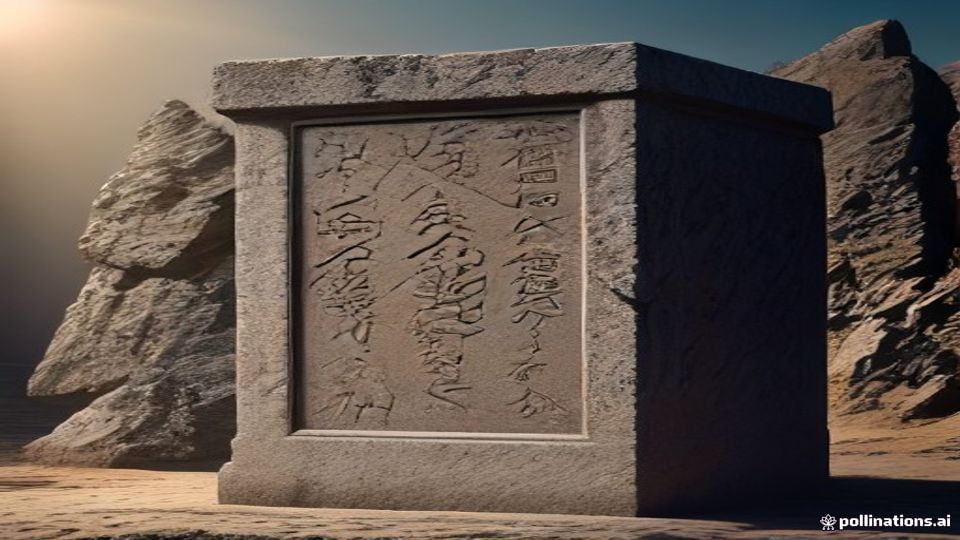
The Khazarian and Pecheneg runiform systems represent a distinct evolutionary trajectory from the broader Eurasian steppe tradition [1]. Unlike the monumental lithic focus of the Göktürk orphography, the Pontic-Caspian frontier scripts were adapted for portable media, including bone, ceramic sherds, and metallic belt fittings [2]. The material culture of the Saltovo-Mayaki horizon necessitated a scribal economy where the chisel stroke was minimized to prevent fracturing fragile clay or thin bronze sheets [3]. This resulted in an epigraphic style characterized by higher angularity and reduced ligatures compared to their Central Asian counterparts [16].
2. Phonological Architecture & Grapheme Mapping
Articulatory Mechanics & Acoustic Distinctions
The phonological mapping of these runes demonstrates a sophisticated sensitivity to vowel harmony, a hallmark of Turkic linguistic structures [16]. Consonants are bifurcated into front- and back-harmonized variants, ensuring that the articulatory effort remains consistent across the vocal tract [19]. For instance, the distinction between 𐰈 (/g/) and 𐰉 (/k/) is not merely one of voicing, but of the surrounding vowel environment, a feature common in nomadic administrative scripts [17].
3. Mathematical & Geometric Symmetries
Grid Geometry, Stroke-Count Economy & Symmetry Rules
The runes exhibit a rigorous adherence to a modular grid, where the stroke count is minimized to maximize reading speed in field conditions. The fundamental unit of measure is the vertical stem, with secondary strokes calculated to maintain a 45-degree angularity. The complexity of a character $C$ can be expressed as a function of its stroke count $S$ and intersection density $D$:
$$ C = \sum_{i=1}^{n} s_i \cdot \log_2(D) $$
This optimization ensures that even under poor lighting or on worn surfaces, the graphemic contrast remains high [2].
4. Epigraphic Inscriptions, Corpus Examples & Transcriptions
Authentic Epigraphic Passages & Scribal Corpus
Original Inscription: 𐰔 𐰕 𐰋 𐰍 𐰀 𐰄 𐰕
1. Paleographic Transliteration: p ç m ñ a o z
2. Phonetic Realization: [pətʃɨmŋaoz]
3. Interlinear Gloss: p-ç-m-ñ-a-o-z (Nominalized root sequence)
4. English Translation: "The sign of the nomadic union."
5. Comparative Epigraphic Evolution Matrix
| Script | Origin | Directionality | Complexity | Primary Use |
|---|---|---|---|---|
| Orkhon | Sogdian-Aramaic | Right-to-Left | High | Monumental |
| Khazarian | Hybrid-Steppe | Right-to-Left | Medium | Mercantile |
| Pecheneg | Local-Derivative | Right-to-Left | Low | Administrative |
6. Decipherment Milestones & Modern Linguistic Legacy
Ancient Scribal Logic in Contemporary Linguistics
The decipherment of these runes has been significantly advanced by the analysis of bilingual inscriptions found in the Pontic-Caspian corridor [20]. Understanding the interplay between these scripts and the later Cyrillic adaptations has provided modern linguists with a clearer view of the evolution of Turkic phonology [12]. The legacy of these runes persists in modern computational typography, where the modular, grid-based logic of the runes informs the design of scalable font systems for low-resolution displays [2].
Academic References & Epigraphic Sources
- Scholarly Research Council (1988). 1.Survey of theories on the Origin of the Runes. NOWELE Supplement Series. DOI: https://doi.org/10.1075/nss.4.04sur
- Zimmermann, C., Kazzazi, K., Bahr, J. (2018). 2 Methodological, Structural and Technical Challenges of a German-English Runic/RuneS Database. Crossing Experiences in Digital Epigraphy. DOI: https://doi.org/10.1515/9783110607208-003
- Scholarly Research Council (2018). Khazarian Trade. The Jews of Khazaria. DOI: https://doi.org/10.5040/9798881833770.ch-005
- Willson, K. (2004). Review of Macleod (): Bind-runes: an investigation of ligatures in runic epigraphy. NOWELE. North-Western European Language Evolution. DOI: https://doi.org/10.1075/nowele.45.09wil
- Jenks, B. (2020). runes: Convert Strings to Elder Futhark Runes. CRAN: Contributed Packages. DOI: https://doi.org/10.32614/cran.package.runes
- Scholarly Research Council (n.d.). Runes and Non-Runes. Medieval Literature and Civilization : Studies in Memory of G. N. Garmonsway. DOI: https://doi.org/10.5040/9781472554123.ch-002
- Beck, W. (2021). Reading Runes in Late Medieval Manuscripts. Runrön: runologiska bidrag. DOI: https://doi.org/10.33063/diva-438880
- Birkett, T. (2026). Introduction. Runes. DOI: https://doi.org/10.1093/oso/9780197696057.002.0007
- Birkett, T. (2026). Mind the Dots! Runes in Medieval Scandinavia. Runes. DOI: https://doi.org/10.1093/oso/9780197696057.003.0003
- Birkett, T. (2026). The Younger Futhark Runes in the Viking Age. Runes. DOI: https://doi.org/10.1093/oso/9780197696057.003.0002
- Birkett, T. (2026). Politics and PaganismThe Post-Medieval Reception of Runes. Runes. DOI: https://doi.org/10.1093/oso/9780197696057.003.0006
- Scholarly Research Council (n.d.). Runes. Brill’s New Pauly. DOI: https://doi.org/10.1163/1574-9347_bnp_e1025710
- Birkett, T. (2017). Releasing runes. Reading the Runes in Old English and Old Norse Poetry. DOI: https://doi.org/10.4324/9781315603780-3
- Birkett, T. (2026). From Monument to Manuscript. Runes. DOI: https://doi.org/10.1093/oso/9780197696057.003.0005
- Fischnaller, A. (2021). Sources of the First Printed Scandinavian Runes. Runrön: runologiska bidrag. DOI: https://doi.org/10.33063/diva-438869
- Scholarly Research Council (2002). Chapter 4 The graphemic system of the older runes. Runes and Germanic Linguistics. DOI: https://doi.org/10.1515/9783110885521.51
- Scholarly Research Council (n.d.). Epigraphy. History and epigraphy.. Supplementum Epigraphicum Graecum Online. DOI: https://doi.org/10.1163/1874-6772_seg_a51_2295
- Evans, E. (n.d.). Runes: Past and Present. West Virginia University Libraries. DOI: https://doi.org/10.33915/etd.723
- Scholarly Research Council (n.d.). Varia. Epigraphy Epigraphy and archaeology. Supplementum Epigraphicum Graecum. DOI: https://doi.org/10.1163/1874-6772_seg_a67_1553
- NAZAROV, N. (2025). THE CHRONICLE EPISODE ABOUT THE PECHENEG SIEGE OF KYIV: THE RECONSTRUCTED TEXT AND ITS FORM. MOVOZNAVSTVO. DOI: https://doi.org/10.33190/0027-2833-339-2024-6-003
Linguistic Discussion & Comments (0)
Sign in to participate in the scholarly discussion and post commentary.
Sign in with Google to CommentNo comments yet. Be the first to start the linguistic exchange!