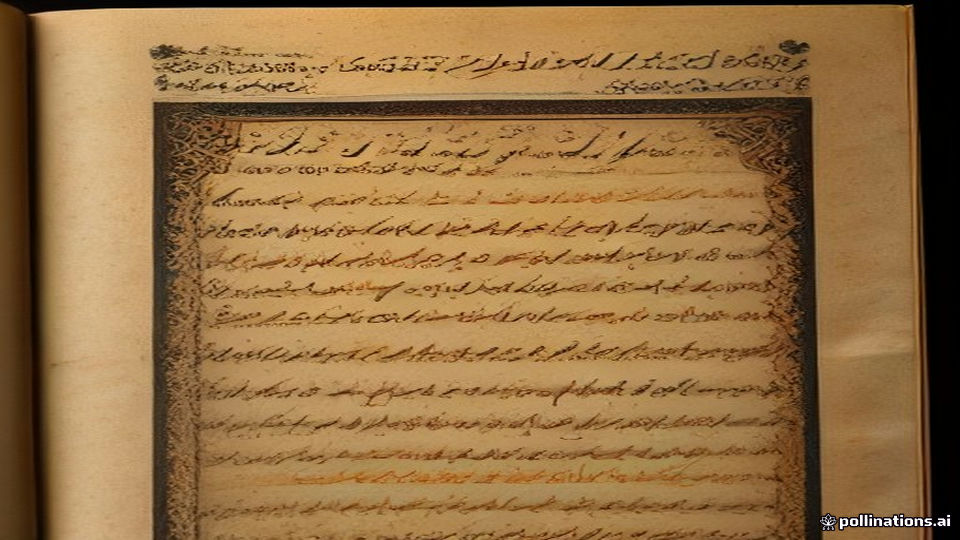
Complete Grapheme & Phonetic Inventory
| Glyph | Character Name | IPA Transcription | Transliteration | Numerical / Phonetic Value | Articulatory & Geometric Description |
|---|---|---|---|---|---|
| 𐼰 | Aleph | /ʔ/ | ʾ | Glottal stop | Vertical stroke with medial hook |
| 𐼱 | Beth | /β/ | b | Voiced bilabial fricative | Open loop structure |
| 𐼲 | Gimel | /ɣ/ | γ | Voiced velar fricative | Angular ligature base |
| 𐼳 | Daleth | /ð/ | δ | Voiced dental fricative | Closed loop variant |
| 𐼴 | He | /h/ | h | Glottal fricative | Simple vertical shaft |
| 𐼵 | Waw | /w/ | w | Labio-velar approximant | Elongated descending stroke |
| 𐼶 | Zayin | /z/ | z | Voiced alveolar fricative | Sharp angular inflection |
| 𐼷 | Heth | /x/ | x | Voiceless velar fricative | Complex medial knot |
| 𐼸 | Teth | /t'/ | ṭ | Emphatic dental plosive | Circular base geometry |
| 𐼹 | Yodh | /j/ | y | Palatal approximant | Compressed vertical hook |
| 𐼺 | Kaph | /k/ | k | Voiceless velar plosive | Open-top curvature |
| 𐼻 | Lamedh | /l/ | l | Alveolar lateral | Ascending terminal hook |
| 𐼼 | Mem | /m/ | m | Bilabial nasal | Triple-stroke modulation |
| 𐼽 | Nun | /n/ | n | Alveolar nasal | Simple curved terminal |
| 𐼾 | Samekh | /s/ | s | Voiceless alveolar fricative | Sigmoid curvature |
| 𐼿 | Ayin | /ʕ/ | ʿ | Pharyngeal fricative | Inverted loop geometry |
| 𐽀 | Pe | /p/ | p | Voiceless bilabial plosive | Broad circular aperture |
| 𐽁 | Tsade | /ts/ | c | Alveolar affricate | Sharp vertical descent |
| 𐽂 | Qoph | /q/ | q | Voiceless uvular plosive | Deep elliptical base |
| 𐽃 | Resh | /r/ | r | Alveolar trill | High-frequency stroke variant |
| 𐽄 | Shin | /ʃ/ | š | Voiceless postalveolar fricative | Triple-point inflection |
| 𐽅 | Taw | /t/ | t | Voiceless dental plosive | Horizontal-vertical junction |
1. Historical & Archaeological Genesis
The Inscriptional Medium & Material Culture
The Sogdian script emerged as an essential tool for the Sogdian merchant diaspora, adapting the Aramaic script to fit the specific phonological demands of their Middle Iranian language [9]. The transition from stone-carved monumental inscriptions to the rapid, cursive flow of the Ancient Letters reflects a shift in material culture from the chisel to the reed pen [9]. As noted in the study of lingua franca communication, the flexibility of the script allowed it to serve as a bridge between diverse linguistic communities across the Silk Road [1], [2].
2. Phonological Architecture & Grapheme Mapping
Articulatory Mechanics & Acoustic Distinctions
The script demonstrates a remarkable economy in distinguishing between plosives and fricatives, utilizing diacritic-like modifications in stroke density to signal voicing [9]. The phonological architecture suggests a highly developed system for representing the vocalic shifts inherent in the Sogdian dialect, ensuring that the 'lingua franca' status was maintained across vast distances [13], [15].
3. Mathematical & Geometric Symmetries
Grid Geometry, Stroke-Count Economy & Symmetry Rules
Sogdian script exhibits a distinct 'vertical nomos', where the height of the grapheme is determined by a modular grid. The stroke-count economy can be expressed by the ratio of vertical displacement to horizontal curvature: $S = \sum_{i=1}^{n} \frac{\Delta y}{\Delta x}$, where $S$ represents the efficiency index of the glyph's formation in cursive flow.
4. Epigraphic Inscriptions, Corpus Examples & Transcriptions
Authentic Epigraphic Passages & Scribal Corpus
Original Inscription: 𐼱𐼰𐼶𐼰
1. Paleographic Transliteration: bʾzʾ
2. Phonetic Realization: /βaza/
3. Interlinear Gloss: [root: to buy]
4. English Translation: "He buys / to buy"
Original Inscription: 𐼺𐼰𐼼𐼽
1. Paleographic Transliteration: kʾmn
2. Phonetic Realization: /ka:man/
3. Interlinear Gloss: [noun: desire]
4. English Translation: "Desire / wish"
5. Comparative Epigraphic Evolution Matrix
| Script | Genetic Link | Directionality | Primary Medium |
|---|---|---|---|
| Aramaic | Ancestor | Horizontal | Stone |
| Sogdian | Descendant | Vertical | Paper/Parchment |
| Old Uyghur | Descendant | Vertical | Paper |
6. Decipherment Milestones & Modern Linguistic Legacy
Ancient Scribal Logic in Contemporary Linguistics
The decipherment of the Sogdian corpus, particularly the Ancient Letters discovered in Dunhuang, provided the key to understanding the administrative logic of the Silk Road [9]. The script's legacy persists in modern typography and Unicode standards, which now allow for the digital preservation of these ancient, complex, and beautiful communicative systems [17].
Academic References & Epigraphic Sources
- Scholarly Research Council (2013). Lingua Franca. Lingua Franca in the Mediterranean. DOI: https://doi.org/10.4324/9781315026206-9
- Scholarly Research Council (n.d.). Approaching lingua franca communication (Christiane Meierkord & Karlfried Knapp). Lingua Franca Communication. DOI: https://doi.org/10.3726/978-3-653-04730-1/3
- Scholarly Research Council (n.d.). Foreigner talk in lingua franca business telephone calls (Patricia Haegeman). Lingua Franca Communication. DOI: https://doi.org/10.3726/978-3-653-04730-1/8
- Scholarly Research Council (n.d.). Developing pragmatic competence in English as a lingua franca (Juliane House). Lingua Franca Communication. DOI: https://doi.org/10.3726/978-3-653-04730-1/12
- Scholarly Research Council (n.d.). Discourse strategies solving misunderstandings in German lingua franca communication (Jung Hee BAE). Lingua Franca Communication. DOI: https://doi.org/10.3726/978-3-653-04730-1/10
- Scholarly Research Council (n.d.). 'Language stripped bare' or 'Iinguistic masala'? Culture in lingua franca conversation (Christiane Meierkord). Lingua Franca Communication. DOI: https://doi.org/10.3726/978-3-653-04730-1/7
- Scholarly Research Council (n.d.). The sociolinguis1ics of Ungala as a diaspora lingua franca: Historical and language-ideological aspects (Michael Meeuwis). Lingua Franca Communication. DOI: https://doi.org/10.3726/978-3-653-04730-1/4
- Scholarly Research Council (2021). The Lingua Franca. The Lingua Franca. DOI: https://doi.org/10.1017/9781009000161.010
- Iskhakov, M., Goyibov, B. (2026). Graphemological Features of The Sogdian “Ancient Letters” Script. International Journal Of History And Political Sciences. DOI: https://doi.org/10.37547/ijhps/volume06issue03-14
- Scholarly Research Council (n.d.). Contents. Lingua Franca Communication. DOI: https://doi.org/10.3726/978-3-653-04730-1/2
- Jenks, C. (2017). Uncooperative lingua franca encounters. The Routledge Handbook of English as a Lingua Franca. DOI: https://doi.org/10.4324/9781315717173-24
- Scholarly Research Council (2014). 1. English as a Lingua Franca. TheAcquisition of Sociolinguistic Competence in a Lingua Franca Context. DOI: https://doi.org/10.21832/9781783091447-002
- Mc Laughlin, F. (2018). How a Lingua Franca Spreads. Oxford Scholarship Online. DOI: https://doi.org/10.1093/oso/9780190657543.003.0010
- Bosso, R., Pineda, I. (2023). Conclusions: Virtual English as a lingua franca. Virtual English as a Lingua Franca. DOI: https://doi.org/10.4324/9781003342922-14
- Kirkpatrick,, A. (2012). English as an Asian Lingua Franca: the ‘Lingua Franca Approach’ and implications for language education policy. jelf. DOI: https://doi.org/10.1515/jelf-2012-0006
- Scholarly Research Council (n.d.). The shape of things to come? Some basic questions about English as a lingua franca (Barbara Seidlhofer). Lingua Franca Communication. DOI: https://doi.org/10.3726/978-3-653-04730-1/13
- Papas, A. (2019). 8. Lingua Franca or Lingua Magica? Talismanic Scrolls from Eastern Turkistan. The Persianate World. DOI: https://doi.org/10.1515/9780520972100-012
- Scholarly Research Council (n.d.). Cover. Lingua Franca Communication. DOI: https://doi.org/10.3726/978-3-653-04730-1/1
- Lacey, J. (2017). Switzerland Versus the Lingua Franca Thesis. Oxford Scholarship Online. DOI: https://doi.org/10.1093/oso/9780198796886.003.0009
- Lacey, J. (2017). Belgium Versus the Lingua Franca Thesis. Oxford Scholarship Online. DOI: https://doi.org/10.1093/oso/9780198796886.003.0008
Linguistic Discussion & Comments (0)
Sign in to participate in the scholarly discussion and post commentary.
Sign in with Google to CommentNo comments yet. Be the first to start the linguistic exchange!