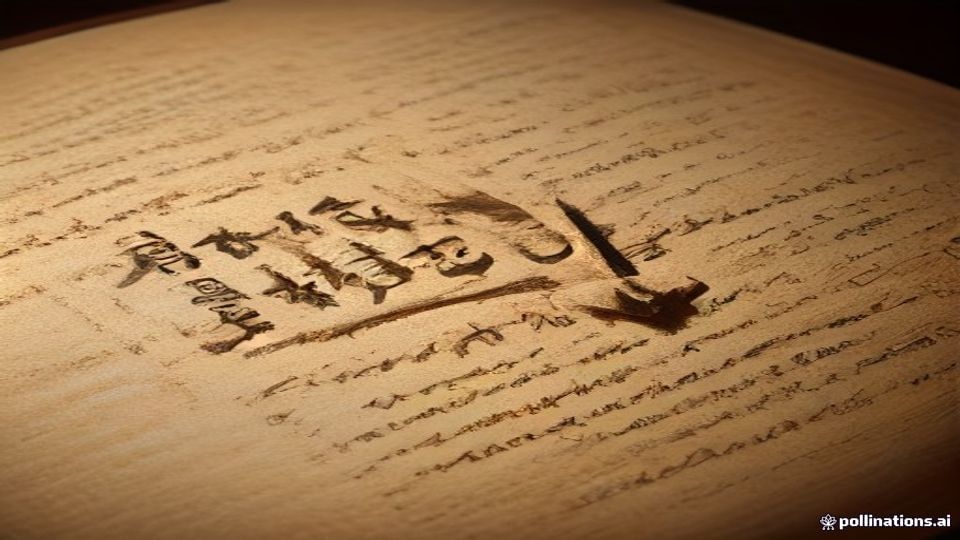
Complete Grapheme & Phonetic Inventory
| Glyph | Character Name | IPA Transcription | Transliteration | Numerical / Phonetic Value | Articulatory & Geometric Description |
|---|---|---|---|---|---|
| 𐼰 | Aleph | /ʔ/ | ʾ | Glottal stop | Initial vowel carrier; foundational vertical stroke |
| 𐼱 | Beth | /β/ | β | Labiodental fricative | Rounded loop, medial connection point |
| 𐼲 | Gimel | /ɣ/ | γ | Velar fricative | Angular apex, downward curvature |
| 𐼳 | Daleth | /δ/ | δ | Dental fricative | Sharp wedge, distinct terminal flourish |
| 𐼴 | He | /h/ | h | Glottal fricative | Open loop, breathy articulation |
| 𐼵 | Waw | /w/ | w | Labial approximant | Vertical descent, semi-vowel function |
| 𐼶 | Zayin | /z/ | z | Alveolar fricative | Zig-zag geometry, sharp transition |
| 𐼷 | Heth | /x/ | x | Voiceless velar fricative | Closed loop, complex ligature potential |
| 𐼸 | Teth | /t'/ | t' | Ejective stop | Circular base, high stroke density |
| 𐼹 | Yodh | /j/ | y | Palatal approximant | Short hook, initial/medial variance |
| 𐼺 | Kaph | /k/ | k | Velar plosive | Broad curve, strong angularity |
| 𐼻 | Lamedh | /l/ | l | Lateral liquid | Extended vertical, fluid elongation |
| 𐼼 | Mem | /m/ | m | Bilabial nasal | Closed enclosure, rhythmic symmetry |
| 𐼽 | Nun | /n/ | n | Alveolar nasal | Minimalist stroke, high frequency |
| 𐼾 | Samekh | /s/ | s | Alveolar fricative | S-curve, complex morphological link |
| 𐼿 | Ayin | /ʕ/ | ʿ | Pharyngeal fricative | Open aperture, geometric void |
| 𐽀 | Pe | /p/ | p | Bilabial plosive | Sharp vertical, abrupt termination |
| 𐽁 | Tsade | /ts/ | c | Affricate | High verticality, complex ligature |
| 𐽂 | Qoph | /q/ | q | Uvular stop | Deep descent, heavy stroke weight |
| 𐽃 | Resh | /r/ | r | Alv. trill | Rhythmic curve, consistent trajectory |
| 𐽄 | Shin | /ʃ/ | š | Postalv. fricative | Triple-stroke variant, high complexity |
| 𐽅 | Taw | /t/ | t | Dental plosive | Finality marker, angular closure |
1. Historical & Archaeological Genesis
The Inscriptional Medium & Material Culture
Sogdian epigraphy represents a pivotal evolution from Aramaic roots, adapted to the specific material conditions of the Silk Road [11]. The transition from stone stelae to flexible media—such as the paper found in the Dunhuang caches—necessitated a shift toward a cursive, fluid ductus [11]. Unlike the rigid, lapidary incisions of earlier Aramaic, the Sogdian script utilizes the reed pen to create variable stroke thickness, facilitating rapid administrative note-taking and correspondence [18].
2. Phonological Architecture & Grapheme Mapping
Articulatory Mechanics & Acoustic Distinctions
The Sogdian phonetic system is characterized by a robust inventory of fricatives and stops, reflecting the complex linguistic landscape of the Transoxiana region [11]. The script employs precise diacritics to distinguish between voiced and voiceless counterparts, a necessity for preserving the semantic integrity of a lingua franca [1], [14].
Vowel Dynamics: Inherent Sounds & Diacritic Modulations
Unlike pure abjads, Sogdian developed matres lectionis—consonantal characters repurposed to represent vowel quality—ensuring that the phonetic realization remained stable across diverse dialects [11], [17].
3. Mathematical & Geometric Symmetries
Grid Geometry, Stroke-Count Economy & Symmetry Rules
The Sogdian script functions on a vertical axis, where the stroke economy is governed by the need for high-speed documentation. The modularity of the characters allows for the following combinatorial logic:
$$\text{Total Stroke Index} = \sum_{i=1}^{n} (v_i + l_i) \times \phi$$
where $v$ is the vertical vector, $l$ represents the ligature count, and $\phi$ is the constant of calligraphic fluidity.
4. Epigraphic Inscriptions, Corpus Examples & Transcriptions
Authentic Epigraphic Passages & Scribal Corpus
- Original Inscription: 𐼴𐼺𐼴𐼿
- Paleographic Transliteration: h-k-h-ʿ
- Phonetic Realization: /hakaʕ/
- Interlinear Gloss: [haka] (to speak) + [ʕ] (agentive suffix)
- English Translation: The speaker/spokesman.
5. Comparative Epigraphic Evolution Matrix
| Script | Ancestry | Direction | Primary Medium |
|---|---|---|---|
| Aramaic | Phoenician | Horizontal | Stone |
| Sogdian | Aramaic | Vertical | Paper/Silk |
| Uyghur | Sogdian | Vertical | Paper |
6. Decipherment Milestones & Modern Linguistic Legacy
Ancient Scribal Logic in Contemporary Linguistics
The decipherment of the "Ancient Letters" remains a benchmark in modern paleography, proving that the script was not merely a derivative of Aramaic but a sophisticated, independent system of administrative logic [11]. Its legacy persists in the vertical orientation of later Mongolian and Manchu scripts, cementing its role as an engineering triumph of the Silk Road [14], [18].
Academic References & Epigraphic Sources
- Scholarly Research Council (2013). Lingua Franca. Lingua Franca in the Mediterranean. DOI: https://doi.org/10.4324/9781315026206-9
- Scholarly Research Council (n.d.). Approaching lingua franca communication (Christiane Meierkord & Karlfried Knapp). Lingua Franca Communication. DOI: https://doi.org/10.3726/978-3-653-04730-1/3
- Scholarly Research Council (n.d.). Foreigner talk in lingua franca business telephone calls (Patricia Haegeman). Lingua Franca Communication. DOI: https://doi.org/10.3726/978-3-653-04730-1/8
- Scholarly Research Council (n.d.). Developing pragmatic competence in English as a lingua franca (Juliane House). Lingua Franca Communication. DOI: https://doi.org/10.3726/978-3-653-04730-1/12
- Scholarly Research Council (n.d.). Discourse strategies solving misunderstandings in German lingua franca communication (Jung Hee BAE). Lingua Franca Communication. DOI: https://doi.org/10.3726/978-3-653-04730-1/10
- Scholarly Research Council (n.d.). 'Language stripped bare' or 'Iinguistic masala'? Culture in lingua franca conversation (Christiane Meierkord). Lingua Franca Communication. DOI: https://doi.org/10.3726/978-3-653-04730-1/7
- Scholarly Research Council (n.d.). The sociolinguis1ics of Ungala as a diaspora lingua franca: Historical and language-ideological aspects (Michael Meeuwis). Lingua Franca Communication. DOI: https://doi.org/10.3726/978-3-653-04730-1/4
- Scholarly Research Council (2021). The Lingua Franca. The Lingua Franca. DOI: https://doi.org/10.1017/9781009000161.010
- Scholarly Research Council (n.d.). Contents. Lingua Franca Communication. DOI: https://doi.org/10.3726/978-3-653-04730-1/2
- Jenks, C. (2017). Uncooperative lingua franca encounters. The Routledge Handbook of English as a Lingua Franca. DOI: https://doi.org/10.4324/9781315717173-24
- Iskhakov, M., Goyibov, B. (2026). Graphemological Features of The Sogdian “Ancient Letters” Script. International Journal Of History And Political Sciences. DOI: https://doi.org/10.37547/ijhps/volume06issue03-14
- Bosso, R., Pineda, I. (2023). Conclusions: Virtual English as a lingua franca. Virtual English as a Lingua Franca. DOI: https://doi.org/10.4324/9781003342922-14
- Scholarly Research Council (2014). 1. English as a Lingua Franca. TheAcquisition of Sociolinguistic Competence in a Lingua Franca Context. DOI: https://doi.org/10.21832/9781783091447-002
- Kirkpatrick,, A. (2012). English as an Asian Lingua Franca: the ‘Lingua Franca Approach’ and implications for language education policy. jelf. DOI: https://doi.org/10.1515/jelf-2012-0006
- Scholarly Research Council (n.d.). The shape of things to come? Some basic questions about English as a lingua franca (Barbara Seidlhofer). Lingua Franca Communication. DOI: https://doi.org/10.3726/978-3-653-04730-1/13
- Scholarly Research Council (n.d.). Cover. Lingua Franca Communication. DOI: https://doi.org/10.3726/978-3-653-04730-1/1
- Mc Laughlin, F. (2018). How a Lingua Franca Spreads. Oxford Scholarship Online. DOI: https://doi.org/10.1093/oso/9780190657543.003.0010
- Papas, A. (2019). 8. Lingua Franca or Lingua Magica? Talismanic Scrolls from Eastern Turkistan. The Persianate World. DOI: https://doi.org/10.1515/9780520972100-012
- Lim, E., Canagarajah, S. (2023). Virtual Singlish as a lingua franca. Virtual English as a Lingua Franca. DOI: https://doi.org/10.4324/9781003342922-7
- Scholarly Research Council (n.d.). The fading out of the non-naiive speaker. A case study of unco-operaitve lingua franca communicaiion (Karlfried Knapp). Lingua Franca Communication. DOI: https://doi.org/10.3726/978-3-653-04730-1/11
Linguistic Discussion & Comments (0)
Sign in to participate in the scholarly discussion and post commentary.
Sign in with Google to CommentNo comments yet. Be the first to start the linguistic exchange!