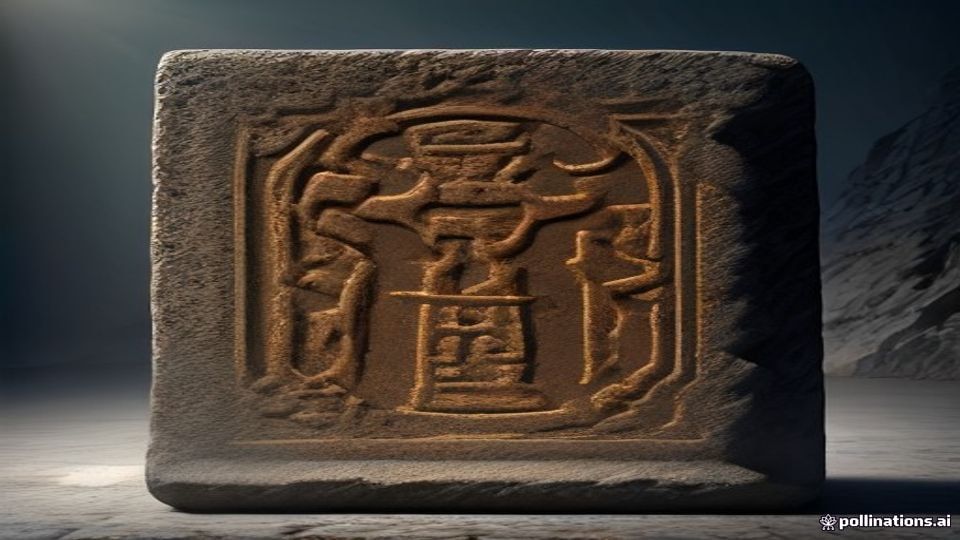
Complete Grapheme & Phonetic Inventory
| Glyph | Character Name | IPA Transcription | Transliteration | Numerical / Phonetic Value | Articulatory & Geometric Description |
|---|---|---|---|---|---|
| 𐰀 | A/Ä | [a], [æ] | a, ä | Vowel | Unrounded open central/front |
| 𐰃 | I/İ | [ɯ], [i] | ı, i | Vowel | Unrounded close back/front |
| 𐰆 | O/U | [o], [u] | o, u | Vowel | Rounded mid/close back |
| 𐰅 | E | [e] | e | Vowel | Unrounded mid front |
| 𐰉 | B¹ | [b] | b | Consonant | Voiced bilabial plosive (back) |
| 𐰋 | B² | [b] | b | Consonant | Voiced bilabial plosive (front) |
| 𐰑 | D¹ | [d] | d | Consonant | Voiced alveolar plosive (back) |
| 𐰓 | D² | [d] | d | Consonant | Voiced alveolar plosive (front) |
| 𐰎 | G¹ | [g] | g | Consonant | Voiced velar plosive (back) |
| 𐰏 | G² | [g] | g | Consonant | Voiced velar plosive (front) |
| 𐰔 | Z | [z] | z | Consonant | Voiced alveolar fricative |
| 𐰖 | Y¹ | [j] | y | Consonant | Palatal approximant (back) |
| 𐰘 | Y² | [j] | y | Consonant | Palatal approximant (front) |
| 𐰚 | K¹ | [k] | k | Consonant | Voiceless velar plosive (back) |
| 𐰜 | K² | [k] | k | Consonant | Voiceless velar plosive (front) |
| 𐰠 | L¹ | [l] | l | Consonant | Alveolar lateral (back) |
| 𐰡 | L² | [l] | l | Consonant | Alveolar lateral (front) |
| 𐰢 | M | [m] | m | Consonant | Bilabial nasal |
| 𐰣 | N¹ | [n] | n | Consonant | Alveolar nasal (back) |
| 𐰤 | N² | [n] | n | Consonant | Alveolar nasal (front) |
| 𐰦 | NT | [nt] | nt | Consonant | Nasal-plosive cluster |
| 𐰧 | NČ | [ntʃ] | nç | Consonant | Nasal-affricate cluster |
| 𐰨 | NY | [nj] | ny | Consonant | Nasal-approximant cluster |
| 𐰩 | NG | [ŋ] | ñ | Consonant | Velar nasal |
| 𐰪 | NZ | [nz] | nz | Consonant | Nasal-fricative cluster |
| 𐰫 | LT | [lt] | lt | Consonant | Lateral-plosive cluster |
| 𐰬 | LD | [ld] | ld | Consonant | Lateral-plosive cluster |
| 𐰭 | NG | [ŋ] | ñ | Consonant | Velar nasal |
| 𐰮 | P | [p] | p | Consonant | Voiceless bilabial plosive |
| 𐰯 | P | [p] | p | Consonant | Voiceless bilabial plosive |
| 𐰰 | Q¹ | [q] | q | Consonant | Voiceless uvular plosive (back) |
| 𐰾 | S¹ | [s] | s | Consonant | Voiceless alveolar fricative (back) |
| 𐰿 | S² | [s] | s | Consonant | Voiceless alveolar fricative (front) |
| 𐱀 | Š | [ʃ] | ş | Consonant | Voiceless postalveolar fricative |
| 𐱁 | Š | [ʃ] | ş | Consonant | Voiceless postalveolar fricative |
| 𐱂 | T¹ | [t] | t | Consonant | Voiceless alveolar plosive (back) |
| 𐱃 | T² | [t] | t | Consonant | Voiceless alveolar plosive (front) |
| 𐱄 | RT | [rt] | rt | Consonant | Rhotic-plosive cluster |
| 𐰈 | R¹ | [r] | r | Consonant | Alveolar trill (back) |
| 𐰩 | R² | [r] | r | Consonant | Alveolar trill (front) |
1. Historical & Archaeological Genesis
The Inscriptional Medium & Material Culture
The Orkhon inscriptions represent a pinnacle of steppe epigraphic culture, manifesting primarily on monumental stone stelae [1]. The choice of granite and limestone necessitated a specific engraving technique; the chisel-work dictated the angularity of the script, favoring straight, intersecting lines over the fluid curves of later cursive traditions [7]. This "epigraphic habit," as observed in broader comparative studies of monumentality, served to project political legitimacy across the vast, nomadic landscapes of the Second Turkic Khaganate [8], [12].
2. Phonological Architecture & Grapheme Mapping
Articulatory Mechanics & Acoustic Distinctions
The script is fundamentally phonetic, employing a sophisticated system of consonant pairing to account for back and front vowel harmony [6]. Each plosive, such as the velar /k/ or the alveolar /t/, possesses distinct glyphs to reflect the harmonic environment of the following vowel [14]. This allows for an economy of representation where the vowel is often implied or secondary to the consonant's articulatory signature [4].
Vowel Dynamics: Inherent Sounds & Diacritic Modulations
Unlike abugidas that rely on diacritics for every vowel, the Orkhon system uses vowel-specific characters, yet maintains a rigid adherence to the principles of Turkic vocalic harmony [3]. The syntactic function of case suffixes, as analyzed by Polat, is explicitly marked through these vowel-consonant clusters, ensuring semantic clarity in diplomatic texts [3].
3. Mathematical & Geometric Symmetries
Grid Geometry, Stroke-Count Economy & Symmetry Rules
The script exhibits a striking modularity. Many graphemes are composed of a fixed number of strokes, suggesting a grid-based compositional logic. For instance, the symmetry of the /a/ (𐰀) and /o/ (𐰆) characters mirrors the verticality of the script's layout, where the text is read top-to-bottom, right-to-left. The aesthetic balance reflects a calculated geometric ratio, likely optimized for visibility on monumental surfaces.
4. Epigraphic Inscriptions, Corpus Examples & Transcriptions
Authentic Epigraphic Passages & Scribal Corpus
- Original Inscription: 𐱅𐰭𐰼𐰃:𐱅𐰏𐰼𐰃:𐱅𐰇𐰼𐰜:𐰋𐰏𐰠𐰼𐰃
- Paleographic Transliteration: Teŋri tegrü türk begleri
- Phonetic Realization: [teŋri teɡɾy tyɾk beɡleɾi]
- Interlinear Gloss: Heaven-like Turk lords
- English Translation: The Heavenly-like lords of the Turks.
Inscriptional Word Anatomy & Graphemic Variants
The character 𐰋 (B²) is utilized in front-vowel contexts (like beg), whereas 𐰉 (B¹) is reserved for back-vowel contexts, demonstrating the script's inherent phonological awareness in every stroke [6].
5. Comparative Epigraphic Evolution Matrix
| Feature | Orkhon Runes | Sogdian | Brahmi |
|---|---|---|---|
| Direction | Vertical (R-L) | Vertical (R-L) | Horizontal (L-R) |
| Modularity | High (Geometric) | Moderate (Cursive) | Low (Syllabic) |
| Harmony | Explicit | Implicit | None |
6. Decipherment Milestones & Modern Linguistic Legacy
Ancient Scribal Logic in Contemporary Linguistics
The decipherment of the Orkhon script by Thomsen and Radloff remains a landmark in historical linguistics, validating the existence of a sophisticated literary tradition among nomadic steppe empires [9]. Today, the script serves as a cornerstone for understanding the development of Turkic languages and the administrative history of Central Asian diplomacy [16].
Academic References & Epigraphic Sources
- Sharifova, S. (2022). Scientific debate about the genre of the Orkhon-Yenisei inscriptions. Turkic Studies Journal. DOI: https://doi.org/10.32523/2664-5157-2021-4-98-111
- ŞENGÜL, F. (2021). Reinterpretation of Ötükän Yıš Expression in Orkhon Inscriptions. Journal of Old Turkic Studies. DOI: https://doi.org/10.35236/jots.964822
- POLAT, H. (2019). Orhun Yazıtlarındaki Durum Eklerinin Sentaktik İşlevleri Üzerine. Journal of Old Turkic Studies. DOI: https://doi.org/10.35236/jots.577401
- Scholarly Research Council (n.d.). B. OLD TURKIC (OLD AND MIDDLE UIGUR, ORKHON, AND YENISEI). The Turkic Languages and Literatures of Central Asia. DOI: https://doi.org/10.1515/9783110815207.26
- Demirbilek, S. (2018). Sun Zi’nin Savaş Sanatı ile Orhon Yazıtları Arasındaki İlişki Üzerine. Journal of Old Turkic Studies. DOI: https://doi.org/10.35236/jots.386893
- Gotz, M., Tekin, T. (1974). A Grammar of Orkhon Turkic. Oriens. DOI: https://doi.org/10.2307/1580168
- Savelyev, A., Svoyskiy, Y., Chernukhina, A. (2025). Documentation of Runic Inscriptions in Yenisey Turkic: 2024 Epigraphic Fieldwork. Contemporary Studies in Linguistics I. DOI: https://doi.org/10.7816/imuling-15-2025-01x016
- Bodel, J. (2023). Epigraphic Culture and the Epigraphic Mode. Inscriptions and the Epigraphic Habit. DOI: https://doi.org/10.1163/9789004683129_002
- Usman, A. (2018). The Orkhon inscriptions. Encyclopedia of Romantic Nationalism in Europe. DOI: https://doi.org/10.5117/9789462981188/ngxe3p76jxut0ikuqy8t9ewh
- Scholarly Research Council (n.d.). Introduction : Elegiac Inscriptions and the 'Epigraphic Habit'. Textual Permanence : Roman Elegists and Epigraphic Tradition. DOI: https://doi.org/10.5040/9781472540225.0006
- AYDIN, M. (2023). Mihrigül Helil. 鄂尔浑文回鹘碑铭研究 [Orkhon Inscriptions of the Uyghur Kaghanate]. Beijing: China Social Sciences Press, 2022, pp. 337. ISBN: 978-7-5203-9829-9.. Journal of Old Turkic Studies. DOI: https://doi.org/10.35236/jots.1220871
- Meyer, E. (2023). Conclusion: Epigraphic Habits and Epigraphic Communities. Inscriptions and the Epigraphic Habit. DOI: https://doi.org/10.1163/9789004683129_019
- Zerhoch, S. (2023). A Deceptively Simple Ritual: Libation in Greek Inscriptions. Inscriptions and the Epigraphic Habit. DOI: https://doi.org/10.1163/9789004683129_007
- Götz, M. (1971). Talât Tekin, A Grammar of Orkhon Turkic.. Oriens. DOI: https://doi.org/10.1163/18778372-02302401070
- Scholarly Research Council (n.d.). Chios. Inscriptions and epigraphic research.. Supplementum Epigraphicum Graecum Online. DOI: https://doi.org/10.1163/1874-6772_seg_a56_993
- Kordoses, S. (2009). Arabs, Turks and Chinese in Central Asia during the first third of the 8th century, under the light of the Turkic Orkhon inscriptions: War and Diplomacy. East and West. DOI: https://doi.org/10.31826/9781463216771-003
- Sancinito, J. (2023). Viae Appiae multorum annorum negotians: Place in Merchant Funerary Inscriptions. Inscriptions and the Epigraphic Habit. DOI: https://doi.org/10.1163/9789004683129_011
- Benefiel, R., M. Keesling, C. (2023). Inscriptions and the Epigraphic Habit. BRILL. DOI: https://doi.org/10.1163/9789004683129
- Scholarly Research Council (n.d.). SEG 63-18. Athens. Inscriptions: Athenian epigraphic habit.. Supplementum Epigraphicum Graecum. DOI: https://doi.org/10.1163/1874-6772_seg_a63_18
- Scholarly Research Council (n.d.). Naso’s Inscriptions. Textual Permanence : Roman Elegists and Epigraphic Tradition. DOI: https://doi.org/10.5040/9781472540225.ch-004
Linguistic Discussion & Comments (0)
Sign in to participate in the scholarly discussion and post commentary.
Sign in with Google to CommentNo comments yet. Be the first to start the linguistic exchange!