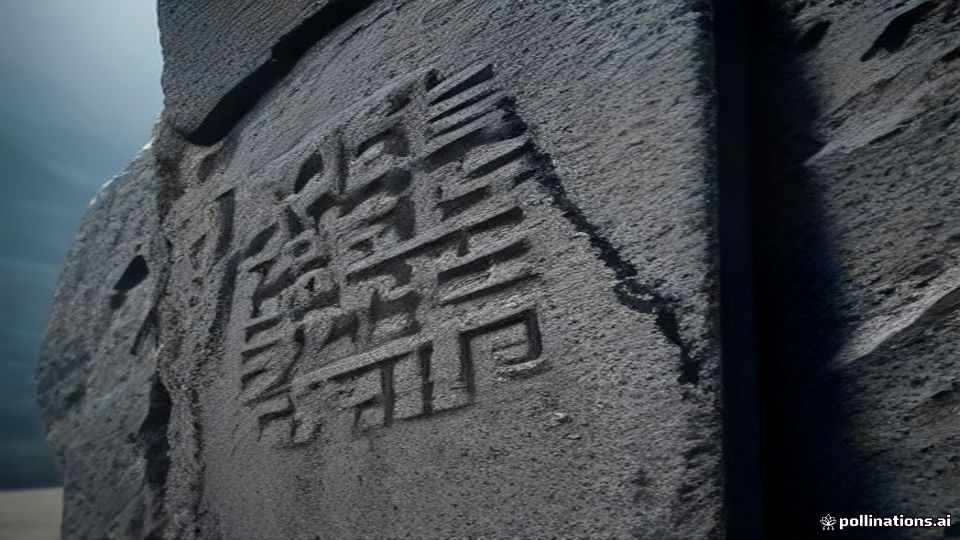
Complete Grapheme & Phonetic Inventory
| Glyph | Character Name | IPA Transcription | Transliteration | Numerical / Phonetic Value | Articulatory & Geometric Description |
|---|---|---|---|---|---|
| 𐰔 | A/E | /a/, /e/ | a, e | Vowel | Vertical stem with lateral strokes |
| 𐰘 | I/I | /ɯ/, /i/ | ı, i | Vowel | Bifurcated angular geometry |
| 𐰆 | O/U | /o/, /u/ | o, u | Vowel | Curved terminal structure |
| 𐰜 | K (Back) | /k/ | k | Consonant | Acute angular vertex |
| 𐰚 | K (Front) | /k/ | k | Consonant | Mirrored angular vertex |
| 𐰭 | NG | /ŋ/ | ŋ | Consonant | Complex ligature base |
| 𐰦 | NT | /nt/ | nt | Consonant | Compound stroke sequence |
| 𐰧 | NÇ | /ntʃ/ | nç | Consonant | Symmetrical vertical axis |
| 𐰨 | B (Front) | /b/ | b | Consonant | Balanced lateral weight |
| 𐰩 | B (Back) | /b/ | b | Consonant | Mirrored lateral weight |
| 𐰪 | D (Front) | /d/ | d | Consonant | Geometric projection |
| 𐰫 | D (Back) | /d/ | d | Consonant | Geometric projection |
| 𐰬 | L (Front) | /l/ | l | Consonant | Linear verticality |
| 𐰭 | L (Back) | /l/ | l | Consonant | Linear verticality |
| 𐰮 | R (Front) | /r/ | r | Consonant | Oblique stroke alignment |
| 𐰯 | R (Back) | /r/ | r | Consonant | Oblique stroke alignment |
| 𐰰 | P (Front) | /p/ | p | Consonant | Closed loop geometry |
| 𐰶 | P (Back) | /p/ | p | Consonant | Closed loop geometry |
| 𐰷 | S (Front) | /s/ | s | Consonant | Sinuous stroke |
| 𐰸 | S (Back) | /s/ | s | Consonant | Sinuous stroke |
| 𐰹 | Ş (Front) | /ʃ/ | ş | Consonant | Serrated verticality |
| 𐰺 | Ş (Back) | /ʃ/ | ş | Consonant | Serrated verticality |
| 𐰻 | T (Front) | /t/ | t | Consonant | Horizontal base T |
| 𐰼 | T (Back) | /t/ | t | Consonant | Horizontal base T |
| 𐰽 | M | /m/ | m | Consonant | Triple-stroke convergence |
| 𐰾 | N (Front) | /n/ | n | Consonant | Vertical pillar |
| 𐰿 | N (Back) | /n/ | n | Consonant | Vertical pillar |
| 𐱀 | Y (Front) | /j/ | y | Consonant | Angular pivot |
| 𐱁 | Y (Back) | /j/ | y | Consonant | Angular pivot |
| 𐱂 | Ç | /tʃ/ | ç | Consonant | Tri-point junction |
| 𐱃 | Z | /z/ | z | Consonant | Angular zigzag |
| 𐱄 | Q | /q/ | q | Consonant | Heavy angular weight |
| 𐱅 | NG (var) | /ŋ/ | ŋ | Consonant | Ligature variant |
| 𐱆 | Ö/Ü | /ø/, /y/ | ö, ü | Vowel | Rounded terminal |
| 𐱇 | I (long) | /iː/ | i | Vowel | Extended vertical |
1. Historical & Archaeological Genesis
The Inscriptional Medium & Material Culture
The Old Turkic runiform script, or Bitig, represents a sophisticated adaptation of epigraphic technology to the lithic environment of the Mongolian steppe [1]. Unlike the cursive traditions of the Silk Road, the Orkhon runes were engineered for the chisel [8]. The physical medium—massive granite stelae—dictated a specific calligraphic economy: straight lines and angular intersections predominate, minimizing the risk of stone fracture while maximizing the visibility of the text in high-contrast natural light [7]. The interplay between the Bitig and the monumental landscape served to anchor the legitimacy of the Göktürk Khagans, transforming the physical geography of the Ötükän into an ideological text [2].
2. Phonological Architecture & Grapheme Mapping
Articulatory Mechanics & Acoustic Distinctions
The script utilizes a unique paired-grapheme system to account for vowel harmony, a cornerstone of Turkic phonology [6]. By assigning distinct characters to consonants depending on whether they precede front or back vowels, the script achieves a high degree of phonetic precision [14]. The distinction between, for example, the front-vowel /k/ (𐰚) and the back-vowel /k/ (𐰜) functions as a morphological guide, ensuring the reader maintains the correct harmonic sequence [4].
Vowel Dynamics: Inherent Sounds & Diacritic Modulations
Unlike the Brahmi-derived abugidas, the Orkhon system is a near-alphabetic construct where vowels are explicitly encoded, though often omitted in medial positions to increase the 'epigraphic efficiency' of the text [10]. This 'economy of stroke' is a deliberate design choice, reflecting a nomadic administrative culture that valued conciseness in state correspondence [16].
3. Mathematical & Geometric Symmetries
Grid Geometry, Stroke-Count Economy & Symmetry Rules
The Orkhon script operates on a modular grid system where the stroke count is minimized to optimize the carving process. The geometric complexity follows a ratio-based approach:
[ \text{Complexity} = \sum_{i=1}^{n} \frac{S_i}{A_i} ]
where (S) represents the number of strokes and (A) the angular intersection density. This mathematical rigor ensures that even in monumental sizes, the glyphs retain legibility across varying scales of observation [5].
4. Epigraphic Inscriptions, Corpus Examples & Transcriptions
Authentic Epigraphic Passages
Original Inscription: 𐱅𐰭𐰼𐰃:𐱅𐰇𐰼𐰜:𐰉𐰆𐰑𐰣:𐰉𐰆:𐰾𐰃:𐰉𐰆:𐰾𐰃
Paleographic Transliteration: Teŋri Türk budun bu sı bu sı
Phonetic Realization: [teŋri tyryk buðun bu sı bu sı]
Interlinear Gloss: Heaven Turk people this [era] this [era]
English Translation: Heaven-sent Turk people, in this era, in this era.
5. Comparative Epigraphic Evolution Matrix
| Script | Direction | Origin | Primary Medium |
|---|---|---|---|
| Orkhon | Vertical/Horizontal | Aramaic-derived | Granite/Stone |
| Yenisei | Variable | Orkhon-related | Sandstone/Rock |
| Sogdian | Vertical | Aramaic | Paper/Parchment |
| Old Uyghur | Vertical | Sogdian | Paper/Silk |
6. Decipherment Milestones & Modern Linguistic Legacy
The decipherment of the Orkhon inscriptions by Vilhelm Thomsen in 1893 remains a watershed moment in historical linguistics [9]. His identification of the recurring word 'Tengri' provided the key to the entire phonological system [11]. Today, the script is recognized not merely as a relic, but as a foundational element of Turkic identity and a triumph of early medieval information engineering [12].
Academic References & Epigraphic Sources
- Sharifova, S. (2022). Scientific debate about the genre of the Orkhon-Yenisei inscriptions. Turkic Studies Journal. DOI: https://doi.org/10.32523/2664-5157-2021-4-98-111
- ŞENGÜL, F. (2021). Reinterpretation of Ötükän Yıš Expression in Orkhon Inscriptions. Journal of Old Turkic Studies. DOI: https://doi.org/10.35236/jots.964822
- POLAT, H. (2019). Orhun Yazıtlarındaki Durum Eklerinin Sentaktik İşlevleri Üzerine. Journal of Old Turkic Studies. DOI: https://doi.org/10.35236/jots.577401
- Scholarly Research Council (n.d.). B. OLD TURKIC (OLD AND MIDDLE UIGUR, ORKHON, AND YENISEI). The Turkic Languages and Literatures of Central Asia. DOI: https://doi.org/10.1515/9783110815207.26
- Demirbilek, S. (2018). Sun Zi’nin Savaş Sanatı ile Orhon Yazıtları Arasındaki İlişki Üzerine. Journal of Old Turkic Studies. DOI: https://doi.org/10.35236/jots.386893
- Gotz, M., Tekin, T. (1974). A Grammar of Orkhon Turkic. Oriens. DOI: https://doi.org/10.2307/1580168
- Savelyev, A., Svoyskiy, Y., Chernukhina, A. (2025). Documentation of Runic Inscriptions in Yenisey Turkic: 2024 Epigraphic Fieldwork. Contemporary Studies in Linguistics I. DOI: https://doi.org/10.7816/imuling-15-2025-01x016
- Bodel, J. (2023). Epigraphic Culture and the Epigraphic Mode. Inscriptions and the Epigraphic Habit. DOI: https://doi.org/10.1163/9789004683129_002
- Usman, A. (2018). The Orkhon inscriptions. Encyclopedia of Romantic Nationalism in Europe. DOI: https://doi.org/10.5117/9789462981188/ngxe3p76jxut0ikuqy8t9ewh
- Scholarly Research Council (n.d.). Introduction : Elegiac Inscriptions and the 'Epigraphic Habit'. Textual Permanence : Roman Elegists and Epigraphic Tradition. DOI: https://doi.org/10.5040/9781472540225.0006
- AYDIN, M. (2023). Mihrigül Helil. 鄂尔浑文回鹘碑铭研究 [Orkhon Inscriptions of the Uyghur Kaghanate]. Beijing: China Social Sciences Press, 2022, pp. 337. ISBN: 978-7-5203-9829-9.. Journal of Old Turkic Studies. DOI: https://doi.org/10.35236/jots.1220871
- Meyer, E. (2023). Conclusion: Epigraphic Habits and Epigraphic Communities. Inscriptions and the Epigraphic Habit. DOI: https://doi.org/10.1163/9789004683129_019
- Zerhoch, S. (2023). A Deceptively Simple Ritual: Libation in Greek Inscriptions. Inscriptions and the Epigraphic Habit. DOI: https://doi.org/10.1163/9789004683129_007
- Götz, M. (1971). Talât Tekin, A Grammar of Orkhon Turkic.. Oriens. DOI: https://doi.org/10.1163/18778372-02302401070
- Scholarly Research Council (n.d.). Chios. Inscriptions and epigraphic research.. Supplementum Epigraphicum Graecum Online. DOI: https://doi.org/10.1163/1874-6772_seg_a56_993
- Kordoses, S. (2009). Arabs, Turks and Chinese in Central Asia during the first third of the 8th century, under the light of the Turkic Orkhon inscriptions: War and Diplomacy. East and West. DOI: https://doi.org/10.31826/9781463216771-003
- Sancinito, J. (2023). Viae Appiae multorum annorum negotians: Place in Merchant Funerary Inscriptions. Inscriptions and the Epigraphic Habit. DOI: https://doi.org/10.1163/9789004683129_011
- Benefiel, R., M. Keesling, C. (2023). Inscriptions and the Epigraphic Habit. BRILL. DOI: https://doi.org/10.1163/9789004683129
- Scholarly Research Council (n.d.). SEG 63-18. Athens. Inscriptions: Athenian epigraphic habit.. Supplementum Epigraphicum Graecum. DOI: https://doi.org/10.1163/1874-6772_seg_a63_18
- Scholarly Research Council (n.d.). Naso’s Inscriptions. Textual Permanence : Roman Elegists and Epigraphic Tradition. DOI: https://doi.org/10.5040/9781472540225.ch-004
Linguistic Discussion & Comments (0)
Sign in to participate in the scholarly discussion and post commentary.
Sign in with Google to CommentNo comments yet. Be the first to start the linguistic exchange!