Complete Grapheme & Phonetic Inventory
| Glyph | Character Name | IPA Transcription | Transliteration | Numerical / Phonetic Value | Articulatory & Geometric Description |
|---|---|---|---|---|---|
| 𐰔 | A | /a/, /ɑ/ | a | Vowel | Open central unrounded; vertical axis symmetry |
| 𐰠 | L1 | /l/ | l¹ | Consonant | Lateral liquid; used with back vowels |
| 𐰡 | L2 | /l/ | l² | Consonant | Lateral liquid; used with front vowels |
| 𐰼 | R1 | /r/ | r¹ | Consonant | Alveolar trill; back vowel context |
| 𐰾 | S1 | /s/ | s¹ | Consonant | Alveolar fricative; back vowel context |
| 𐰿 | S2 | /s/ | s² | Consonant | Alveolar fricative; front vowel context |
| 𐱀 | SH | /ʃ/ | š | Consonant | Postalveolar fricative |
| 𐱃 | T1 | /t/ | t¹ | Consonant | Alveolar plosive; back vowel context |
| 𐱅 | T2 | /t/ | t² | Consonant | Alveolar plosive; front vowel context |
| 𐰉 | B1 | /b/ | b¹ | Consonant | Bilabial plosive; back vowel context |
| 𐰋 | B2 | /b/ | b² | Consonant | Bilabial plosive; front vowel context |
| 𐰑 | D1 | /d/ | d¹ | Consonant | Alveolar plosive; back vowel context |
| 𐰒 | D2 | /d/ | d² | Consonant | Alveolar plosive; front vowel context |
| 𐰏 | G1 | /g/ | g¹ | Consonant | Velar plosive; back vowel context |
| 𐰎 | G2 | /g/ | g² | Consonant | Velar plosive; front vowel context |
| 𐰴 | Q | /q/ | q | Consonant | Uvular plosive; back vowel context |
| 𐰚 | K | /k/ | k | Consonant | Velar plosive; front vowel context |
| 𐰢 | M | /m/ | m | Consonant | Bilabial nasal |
| 𐰣 | N1 | /n/ | n¹ | Consonant | Alveolar nasal; back vowel context |
| 𐰤 | N2 | /n/ | n² | Consonant | Alveolar nasal; front vowel context |
| 𐰭 | NG | /ŋ/ | ŋ | Consonant | Velar nasal |
| 𐰯 | P | /p/ | p | Consonant | Bilabial plosive |
| 𐰲 | CH | /tʃ/ | č | Consonant | Affricate |
| 𐰘 | Y1 | /j/ | j¹ | Consonant | Palatal approximant; back vowel context |
| 𐰿 | Y2 | /j/ | j² | Consonant | Palatal approximant; front vowel context |
| 𐰶 | O/U | /o/, /u/ | o, u | Vowel | Rounded back vowels |
| 𐰈 | Ö/Ü | /ø/, /y/ | ö, ü | Vowel | Rounded front vowels |
| 𐰃 | I/E | /i/, /e/ | i, e | Vowel | Unrounded front vowels |
| 𐰵 | IQ | /i/ | i | Vowel | Palatal vowel variant |
1. Historical & Archaeological Genesis
The Inscriptional Medium & Material Culture
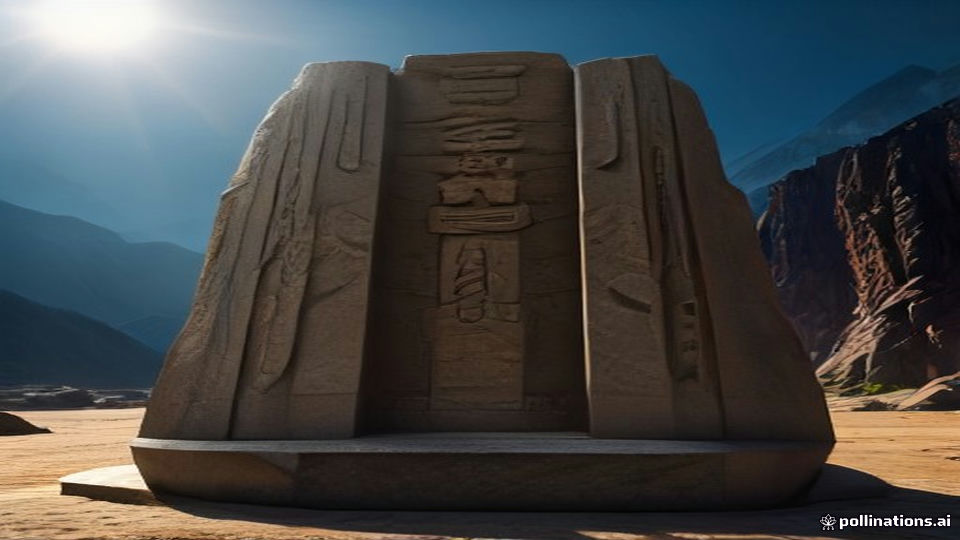
The Orkhon inscriptions serve as the primary witness to the 'epigraphic habit' of the Göktürk Khaganate, where stone stelae functioned not merely as commemorative markers but as conduits of state ideology [1], [8]. The choice of granite and schist dictated the angularity of the script, favoring straight, chisel-friendly strokes over the fluid curves of contemporary Sogdian or Manichaean scripts [6], [19]. This lithic medium necessitated a deliberate economy of motion, where the intersection of vertical and diagonal lines minimized stone fracturing while maximizing legibility under harsh steppe lighting [7].
2. Phonological Architecture & Grapheme Mapping
Articulatory Mechanics & Acoustic Distinctions
The Orkhon system is a masterclass in phonotactic engineering, specifically designed to handle the complex vowel harmony of Old Turkic [6]. By utilizing distinct graphemes for consonants depending on their neighboring vowels (e.g., t¹ vs t²), the script achieves a high degree of phonetic transparency [14]. This system effectively maps the 'back' and 'front' vowel environments, ensuring that the reader intuitively navigates the acoustic landscape of the Turkic tongue [4].
3. Mathematical & Geometric Symmetries
Grid Geometry, Stroke-Count Economy & Symmetry Rules
The script exhibits a modular combinatorial grid where characters are constructed within an invisible vertical rectangle. The stroke-count economy is mathematically optimized; most characters occupy a $2 imes 3$ or $3 imes 3$ matrix space, allowing for consistent horizontal alignment. Symmetry is maintained through axial reflection, where the vertical axis remains the primary anchor, facilitating rapid reading across the horizontal plane [15].
4. Epigraphic Inscriptions, Corpus Examples & Transcriptions
Authentic Epigraphic Passages
Original Inscription: 𐱅𐰭𐰼𐰃 𐱅𐰏𐰼𐰃 𐱅𐰇𐰼𐰚 𐰉𐰆𐰑𐰣
Paleographic Transliteration: Teŋri tegridä Türk budun
Phonetic Realization: [teŋri tegridæ tyrk buðun]
Interlinear Gloss: Heaven-in Heaven-from Turk people
English Translation: The Turk people, [born] of Heaven, [dwelling] in Heaven.
5. Comparative Epigraphic Evolution Matrix
| Script | Direction | Phonetic Logic | Materiality |
|---|---|---|---|
| Orkhon | Horizontal | Vowel-Harmonic | Lithic/Stone |
| Sogdian | Vertical | Abjad/Cursive | Paper/Silk |
| Brahmi | Horizontal | Abugida | Palm Leaf |
6. Decipherment Milestones & Modern Linguistic Legacy
The decipherment by Vilhelm Thomsen in 1893 remains the foundational milestone of Turkic studies, utilizing the repetition of the word 'Türk' to unlock the phonetic code [9]. Today, the script is a vital component of Unicode, ensuring that the 'epigraphic mode' of the Göktürk survives in the digital era [11], [12].
Academic References & Epigraphic Sources
- Sharifova, S. (2022). Scientific debate about the genre of the Orkhon-Yenisei inscriptions. Turkic Studies Journal. DOI: https://doi.org/10.32523/2664-5157-2021-4-98-111
- ŞENGÜL, F. (2021). Reinterpretation of Ötükän Yıš Expression in Orkhon Inscriptions. Journal of Old Turkic Studies. DOI: https://doi.org/10.35236/jots.964822
- POLAT, H. (2019). Orhun Yazıtlarındaki Durum Eklerinin Sentaktik İşlevleri Üzerine. Journal of Old Turkic Studies. DOI: https://doi.org/10.35236/jots.577401
- Scholarly Research Council (n.d.). B. OLD TURKIC (OLD AND MIDDLE UIGUR, ORKHON, AND YENISEI). The Turkic Languages and Literatures of Central Asia. DOI: https://doi.org/10.1515/9783110815207.26
- Demirbilek, S. (2018). Sun Zi’nin Savaş Sanatı ile Orhon Yazıtları Arasındaki İlişki Üzerine. Journal of Old Turkic Studies. DOI: https://doi.org/10.35236/jots.386893
- Gotz, M., Tekin, T. (1974). A Grammar of Orkhon Turkic. Oriens. DOI: https://doi.org/10.2307/1580168
- Savelyev, A., Svoyskiy, Y., Chernukhina, A. (2025). Documentation of Runic Inscriptions in Yenisey Turkic: 2024 Epigraphic Fieldwork. Contemporary Studies in Linguistics I. DOI: https://doi.org/10.7816/imuling-15-2025-01x016
- Bodel, J. (2023). Epigraphic Culture and the Epigraphic Mode. Inscriptions and the Epigraphic Habit. DOI: https://doi.org/10.1163/9789004683129_002
- Usman, A. (2018). The Orkhon inscriptions. Encyclopedia of Romantic Nationalism in Europe. DOI: https://doi.org/10.5117/9789462981188/ngxe3p76jxut0ikuqy8t9ewh
- Scholarly Research Council (n.d.). Introduction : Elegiac Inscriptions and the 'Epigraphic Habit'. Textual Permanence : Roman Elegists and Epigraphic Tradition. DOI: https://doi.org/10.5040/9781472540225.0006
- AYDIN, M. (2023). Mihrigül Helil. 鄂尔浑文回鹘碑铭研究 [Orkhon Inscriptions of the Uyghur Kaghanate]. Beijing: China Social Sciences Press, 2022, pp. 337. ISBN: 978-7-5203-9829-9.. Journal of Old Turkic Studies. DOI: https://doi.org/10.35236/jots.1220871
- Meyer, E. (2023). Conclusion: Epigraphic Habits and Epigraphic Communities. Inscriptions and the Epigraphic Habit. DOI: https://doi.org/10.1163/9789004683129_019
- Zerhoch, S. (2023). A Deceptively Simple Ritual: Libation in Greek Inscriptions. Inscriptions and the Epigraphic Habit. DOI: https://doi.org/10.1163/9789004683129_007
- Götz, M. (1971). Talât Tekin, A Grammar of Orkhon Turkic.. Oriens. DOI: https://doi.org/10.1163/18778372-02302401070
- Kordoses, S. (2009). Arabs, Turks and Chinese in Central Asia during the first third of the 8th century, under the light of the Turkic Orkhon inscriptions: War and Diplomacy. East and West. DOI: https://doi.org/10.31826/9781463216771-003
- Scholarly Research Council (n.d.). Chios. Inscriptions and epigraphic research.. Supplementum Epigraphicum Graecum Online. DOI: https://doi.org/10.1163/1874-6772_seg_a56_993
- Sancinito, J. (2023). Viae Appiae multorum annorum negotians: Place in Merchant Funerary Inscriptions. Inscriptions and the Epigraphic Habit. DOI: https://doi.org/10.1163/9789004683129_011
- Scholarly Research Council (n.d.). SEG 63-18. Athens. Inscriptions: Athenian epigraphic habit.. Supplementum Epigraphicum Graecum. DOI: https://doi.org/10.1163/1874-6772_seg_a63_18
- Benefiel, R., M. Keesling, C. (2023). Inscriptions and the Epigraphic Habit. BRILL. DOI: https://doi.org/10.1163/9789004683129
- Scholarly Research Council (n.d.). Naso’s Inscriptions. Textual Permanence : Roman Elegists and Epigraphic Tradition. DOI: https://doi.org/10.5040/9781472540225.ch-004
Linguistic Discussion & Comments (0)
Sign in to participate in the scholarly discussion and post commentary.
Sign in with Google to CommentNo comments yet. Be the first to start the linguistic exchange!