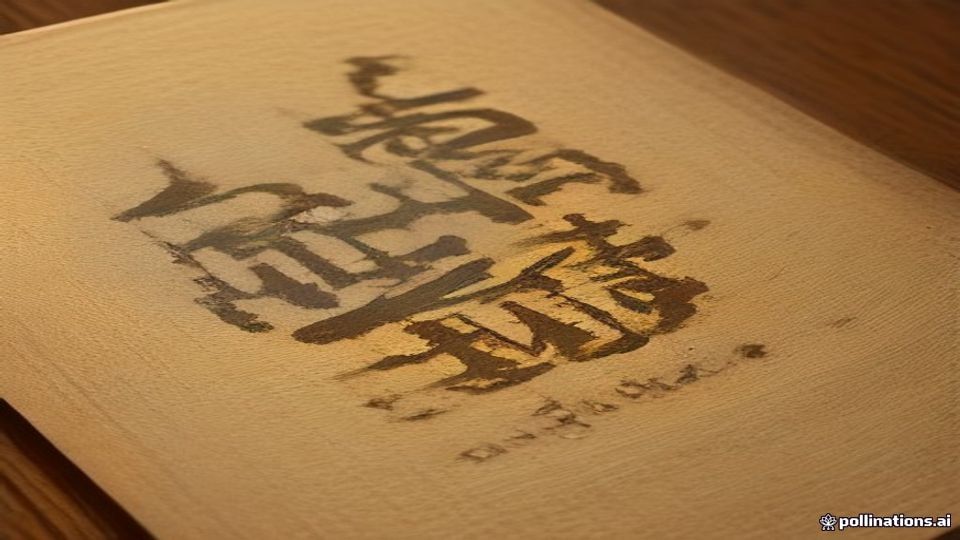
Complete Grapheme & Phonetic Inventory
| Glyph | Character Name | IPA Transcription | Transliteration | Numerical / Phonetic Value | Articulatory & Geometric Description |
|---|---|---|---|---|---|
| 𐱀 | Aleph | /a/, /e/ | a, e | Vowel | Initial glottal stop or vocalic start |
| 𐱁 | Beth | /b/, /p/ | b, p | Consonant | Labial plosive |
| 𐱂 | Gimel | /g/, /k/ | g, k | Consonant | Velar plosive |
| 𐱃 | Daleth | /d/, /t/ | d, t | Consonant | Dental plosive |
| 𐱄 | Waw | /o/, /u/, /w/ | o, u, w | Vowel/Semi-vowel | Rounded back vowel |
| 𐱅 | Zayin | /z/ | z | Consonant | Alveolar fricative |
| 𐱆 | Heth | /h/ | h | Consonant | Glottal fricative |
| 𐱇 | Teth | /t/ | t | Consonant | Emphatic dental plosive |
| 𐱈 | Yodh | /i/, /j/ | i, y | Vowel/Semi-vowel | High front vowel |
| | Kaph | /k/ | k | Consonant | Velar plosive |
| | Lamedh | /l/ | l | Consonant | Lateral liquid |
| | Mem | /m/ | m | Consonant | Bilabial nasal |
| | Nun | /n/ | n | Consonant | Alveolar nasal |
| | Samekh | /s/ | s | Consonant | Alveolar fricative |
| | Ayin | /a/ | a | Vowel | Open central vowel |
| | Pe | /p/ | p | Consonant | Bilabial plosive |
| | Sadhe | /s/ | s | Consonant | Sibilant |
| | Resh | /r/ | r | Consonant | Alveolar trill |
| | Shin | /ʃ/ | š | Consonant | Postalveolar fricative |
| | Taw | /t/ | t | Consonant | Dental plosive |
1. Historical & Archaeological Genesis
The Inscriptional Medium & Material Culture
The transition from the Sogdian cursive tradition to the Old Uyghur script represents a fundamental shift in Silk Road documentation [1]. Utilizing paper—a revolutionary medium in the 8th-century Tarim Basin—the script abandoned the rigid monumentality of stone for the fluid, rapid strokes of the reed pen. As noted in recent paleographic studies [2], the vertical orientation allowed for continuous scroll-based writing, facilitating the rapid production of administrative and Manichaean texts [10]. The curvature of the graphemes, inherited from Aramaic-Sogdian precursors, was refined to accommodate the agglutinative morphology of the Turkic language [5].
2. Phonological Architecture & Grapheme Mapping
Articulatory Mechanics & Acoustic Distinctions
The Old Uyghur script functions as a phonetic engine, mapping Turkic phonemes onto a modified Sogdian inventory [1]. The system employs specific ligatures to distinguish between plosives and fricatives, a necessity for the complex vocalic harmony inherent in Old Turkic [8]. Recent analysis confirms that the script’s ability to resolve ambiguous phonetic clusters was a direct result of its adaptation for diplomatic correspondence [6].
Vowel Dynamics: Inherent Sounds & Diacritic Modulations
Unlike pure abjads, the Old Uyghur system utilizes matres lectionis (𐱀, 𐱄, 𐱈) to represent vocalic quality. This provides a robust framework for recording the front-back vowel harmony of the Turkic linguistic continuum [8].
3. Mathematical & Geometric Symmetries
Grid Geometry, Stroke-Count Economy & Symmetry Rules
The script follows a strict vertical axis, where the width of a character is constrained by the vertical flow of the page. The mathematical economy of the script is seen in its modular combinatorial grid, where glyphs are linked by a central spine. The stroke-count reduction in terminal positions suggests a high degree of scribal efficiency, minimizing kinetic drag for the professional scribe [14].
4. Epigraphic Inscriptions, Corpus Examples & Transcriptions
Authentic Epigraphic Passages
Example 1: A Manichaean Invocation
1. Original Inscription: 𐱀𐱈𐱀𐱈
2. Paleographic Transliteration: amini
3. Phonetic Realization: /amin/
4. Interlinear Gloss: amen (loanword)
5. English Translation: Amen.
Example 2: Administrative Record
1. Original Inscription: 𐱂𐱄𐱄
2. Paleographic Transliteration: kumul
3. Phonetic Realization: /kumul/
4. Interlinear Gloss: Kumul (place name)
5. English Translation: (At) Kumul.
5. Comparative Epigraphic Evolution Matrix
| Script | Origin | Direction | Primary Use |
|---|---|---|---|
| Aramaic | Imperial | Horizontal | Administrative |
| Sogdian | Aramaic | Horizontal/Vertical | Mercantile |
| Old Uyghur | Sogdian | Vertical | State/Religious |
| Mongolian | Old Uyghur | Vertical | Imperial |
6. Decipherment Milestones & Modern Linguistic Legacy
Ancient Scribal Logic in Contemporary Linguistics
The decipherment of the Old Uyghur corpus, heavily bolstered by the Turfan finds [10], has allowed for the reconstruction of pre-Islamic Turkic syntax [14]. Modern research into Handwritten Text Recognition (HTR) now utilizes these ancient vertical structures to train neural networks in segmenting complex cursive scripts [9], [13].
Academic References & Epigraphic Sources
- SIMS-WILLIAMS, N., KORKMAZ, F., KESKİN, B. (2017). THE SOGDIAN SOUND-SYSTEM AND THE ORIGINS OF THE UYGHUR SCRIPT. Istanbul University Faculty of Letters Journal of Turkish Language and Literature. DOI: https://doi.org/10.26561/iutded.369178
- Morano, E. (2018). Some Sodicological Remarks on the Sorpus of the Berlin Turfan Manichaean Sogdian Manuscripts in Manichaean Script: among Books, Glossaries, Letters, Booklets, Bilingual and Trilingual Texts, Normal, Bold and Cursive Script. Written Monuments of the Orient. DOI: https://doi.org/10.17816/wmo35154
- Vajda, S. (n.d.). Cursive Bengali Script Recognition for Indian Postal Automation. Agence Bibliographique de l'Enseignement Supérieur. DOI: https://doi.org/10.70675/5c3fca10z833az4175z8cefzb3da3849ff58
- Iskhakov, M., Goyibov, B. (2026). Graphemological Features of The Sogdian “Ancient Letters” Script. International Journal Of History And Political Sciences. DOI: https://doi.org/10.37547/ijhps/volume06issue03-14
- AYAZLI, Ö. (2020). Soğdca Bazı Sözcüklerin Eski Uygurcadaki İmlası. International Journal of Old Uyghur Studies. DOI: https://doi.org/10.46614/ijous.743040
- Begmatov, A. (2021). Two Sogdian Toponyms in Arabic and Chinese Sources, and their Attestation as Commodity Terms in Sogdian and Uyghur Economical Documents. DABIR. DOI: https://doi.org/10.1163/29497833-00801002
- Yueqing, Z. (2026). Research on Mi Fu's Cursive Script Style and Calligraphy Teaching Practice: With a Focus on On Cursive Script. Research on Literary and Art Development. DOI: https://doi.org/10.47297/wsprolaadwsp2634-786550.20260703
- Scholarly Research Council (n.d.). Old Uyghur Script. Encyclopedia of Turkic Languages and Linguistics Online. DOI: https://doi.org/10.1163/2667-3029_etlo_sim_032216
- Griffiths, R. (2024). Handwritten Text Recognition (HTR) for Tibetan Manuscripts in Cursive Script. Verlag der Österreichischen Akademie der Wissenschaften. DOI: https://doi.org/10.1553/tibschol_erc_htr
- Chunakova, O., Dragoni, F., Morano, E. (2017). A forgotten Manichaean Sogdian bifolio in Sogdian script. Written Monuments of the Orient. DOI: https://doi.org/10.17816/wmo35122
- Hagen, F. (2025). Hieratic. Cambridge University Press. DOI: https://doi.org/10.1017/9781009673600
- Humera Rafique, Javid, T. (n.d.). An Insight for Cursive Context-Specific Printed Script Recognition. Open Engineering Inc. DOI: https://doi.org/10.31224/osf.io/z6jkn
- Naeini, S., Khademi, M., Nikookar, A., Bani, Z. (2012). A Feature-based Approach to Segmentation of Online Persian Cursive Script. International Journal of Modeling and Optimization. DOI: https://doi.org/10.7763/ijmo.2012.v2.149
- Kozintcev, M. (2020). Turkic Poetic Passages Written in Uyghur Vertical Script from the Collection of the Institute of Oriental Manuscripts, RAS. Письменные памятники Востока. DOI: https://doi.org/10.17816/wmo46591
- Morano, E. (2024). Where the Demons Fell. A Manichaean Sogdian Manuscript in Sogdian Script from Mani’s Book of the Giants. Journal of Iranian Linguistics. DOI: https://doi.org/10.46991/jil/2024.01.01
- Farrell, T. (2026). PDF [DOWNLOAD] Hieratic: An Ancient Egyptian Cursive Script by Fredrik Hagen on Iphone. ResearchHub Technologies, Inc.. DOI: https://doi.org/10.55277/researchhub.mzprknyu.1
- Ahmed, S., Razzak, M., Yusof, R. (2020). Foundations of Cursive Scene Text. Cursive Script Text Recognition in Natural Scene Images. DOI: https://doi.org/10.1007/978-981-15-1297-1_1
- LINDSAY, W. (1913). IRISH CURSIVE SCRIPT.. Zeitschrift für celtische Philologie. DOI: https://doi.org/10.1515/zcph.1913.9.1.301
- Ahmed, S., Razzak, M., Yusof, R. (2020). Progress in Cursive Wild Text Recognition. Cursive Script Text Recognition in Natural Scene Images. DOI: https://doi.org/10.1007/978-981-15-1297-1_5
- Scholarly Research Council (n.d.). Figure 2: Top row: original Arabic script (unlabeled). Bottom row: Arabic script with labels marking the upper baseline, baseline, and down line of the Arabic cursive writing.. PeerJ. DOI: https://doi.org/10.7717/peerjcs.1465/fig-2
Linguistic Discussion & Comments (0)
Sign in to participate in the scholarly discussion and post commentary.
Sign in with Google to CommentNo comments yet. Be the first to start the linguistic exchange!