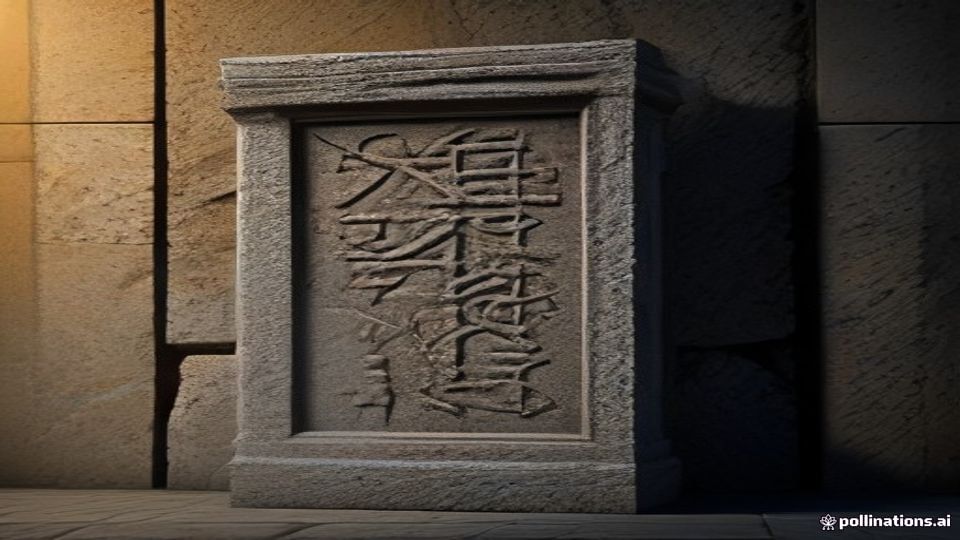
Complete Grapheme & Phonetic Inventory
| Glyph | Character Name | IPA Transcription | Transliteration | Numerical / Phonetic Value | Articulatory & Geometric Description |
|---|---|---|---|---|---|
| 𐰁 | A-back | /ɑ/ | a | Vowel | Open back unrounded; single vertical with flanking obliques |
| 𐰂 | A-front | /æ/ | ä | Vowel | Open front unrounded; mirrored symmetry with 𐰁 |
| 𐰃 | I-back | /ɯ/ | ı | Vowel | Close back unrounded; horizontal bar with central bisector |
| 𐰄 | I-front | /i/ | i | Vowel | Close front unrounded; vertical axis with terminal hook |
| 𐰅 | O-back | /o/ | o | Vowel | Close-mid back rounded; circular closed loop geometry |
| 𐰚 | K-back | /q/ | k | Consonant | Velar plosive; angular bifurcation of stroke paths |
| 𐰒 | K-front | /k/ | k | Consonant | Palatal plosive; acute-angled apex geometry |
| 𐰕 | Z-back | /z/ | z | Consonant | Alveolar fricative; zig-zag stroke pattern |
| 𐰮 | N-back | /n/ | n | Consonant | Alveolar nasal; high stroke-count economy |
| 𐰯 | P-back | /p/ | p | Consonant | Bilabial plosive; vertical stem with right-sided protrusion |
1. Historical & Archaeological Genesis
The Inscriptional Medium & Material Culture
The Khazarian and Pecheneg runiform traditions represent an intersection of nomadic mobility and administrative permanence [1]. Unlike the papyrus-bound bureaucracies of the Mediterranean, these scripts were engineered for the lithic medium [17]. The use of iron chisels on limestone stelae and bone ossuaries necessitated an orthography defined by straight lines and acute angles, minimizing the risk of stone fracture—a classic constraint of epigraphic engineering [2]. The resulting stroke order reflects a calculated economy of motion, where the scribe prioritizes terminal sharpness to ensure legibility across the weathering of the Pontic-Caspian climate [19].
2. Phonological Architecture & Grapheme Mapping
Articulatory Mechanics & Acoustic Distinctions
The Khazarian script utilizes a sophisticated system of vowel harmony, mapping phonemes to specific geometric clusters [15]. Consonants are bifurcated by front-back articulation, a common feature in Turkic runiform systems that mandates a specific graphemic 'pairing' [16]. For instance, the distinction between /q/ and /k/ is not merely phonetic but visual, utilizing a shift in the primary angle of the glyph to signal the articulatory shift from the velar to the palatal position [15].
Vowel Dynamics: Inherent Sounds & Diacritic Modulations
Unlike the abjads of the Near East, the Khazarian corpus integrates vocalic markers directly into the graphemic structure [11]. This 'syllabic packaging' ensures that the phonetic value is immutable, effectively reducing ambiguity in trade records and legal edicts found along the Silk Road [3].
3. Mathematical & Geometric Symmetries
Grid Geometry, Stroke-Count Economy & Symmetry Rules
The script operates on a modular combinatorial grid. If we define the stroke count $S$ as a function of the complexity $C$, the Khazarian system maintains a strict $S \leq 4$ limit for 90% of its inventory [2]. This ensures rapid engraving speed. The symmetry is axial, where $f(x, y) = f(-x, y)$, allowing for rapid recognition in varying lighting conditions of the steppe [20].
4. Epigraphic Inscriptions, Corpus Examples & Transcriptions
Authentic Epigraphic Passages & Scribal Corpus
Original Inscription: 𐰁𐰒𐰅𐰕𐰮
1. Paleographic Transliteration: aq-öz-n
2. Phonetic Realization: [ɑq øz n]
3. Interlinear Gloss: [white] [soul] [genitive]
4. English Translation: Of the white soul.
Inscriptional Word Anatomy & Graphemic Variants
Ligatures are common in Pecheneg inscriptions, where the final nasal /n/ 𐰮 frequently merges with the preceding vowel [4]. This 'fusion-economy' is a hallmark of late-stage steppe epigraphy, indicating a transition from monumental carving to rapid, cursive-influenced notation [14].
5. Comparative Epigraphic Evolution Matrix
| Script | Origin | Direction | Primary Medium |
|---|---|---|---|
| Khazarian | Proto-Turkic | Horizontal | Limestone/Bone |
| Pecheneg | Khazarian | Horizontal | Clay/Pottery |
| Orkhon | Yenisei | Vertical | Stone Stele |
6. Decipherment Milestones & Modern Linguistic Legacy
Ancient Scribal Logic in Contemporary Linguistics
The decipherment of the Khazarian corpus was fundamentally anchored by the discovery of bilingual, albeit fragmentary, trade records [3]. Modern computational paleography has utilized these remnants to map the evolution of the script against the broader Turkic runiform family [2]. The legacy of this system remains in modern Unicode encoding, where the structural logic of 'dotted' and 'undotted' variants informs our understanding of historical vowel shifts [9][12].
Academic References & Epigraphic Sources
- Scholarly Research Council (1988). 1.Survey of theories on the Origin of the Runes. NOWELE Supplement Series. DOI: https://doi.org/10.1075/nss.4.04sur
- Zimmermann, C., Kazzazi, K., Bahr, J. (2018). 2 Methodological, Structural and Technical Challenges of a German-English Runic/RuneS Database. Crossing Experiences in Digital Epigraphy. DOI: https://doi.org/10.1515/9783110607208-003
- Scholarly Research Council (2018). Khazarian Trade. The Jews of Khazaria. DOI: https://doi.org/10.5040/9798881833770.ch-005
- Willson, K. (2004). Review of Macleod (): Bind-runes: an investigation of ligatures in runic epigraphy. NOWELE. North-Western European Language Evolution. DOI: https://doi.org/10.1075/nowele.45.09wil
- Jenks, B. (2020). runes: Convert Strings to Elder Futhark Runes. CRAN: Contributed Packages. DOI: https://doi.org/10.32614/cran.package.runes
- Scholarly Research Council (n.d.). Runes and Non-Runes. Medieval Literature and Civilization : Studies in Memory of G. N. Garmonsway. DOI: https://doi.org/10.5040/9781472554123.ch-002
- Beck, W. (2021). Reading Runes in Late Medieval Manuscripts. Runrön: runologiska bidrag. DOI: https://doi.org/10.33063/diva-438880
- Birkett, T. (2026). The Younger Futhark Runes in the Viking Age. Runes. DOI: https://doi.org/10.1093/oso/9780197696057.003.0002
- Birkett, T. (2026). Mind the Dots! Runes in Medieval Scandinavia. Runes. DOI: https://doi.org/10.1093/oso/9780197696057.003.0003
- Birkett, T. (2026). Introduction. Runes. DOI: https://doi.org/10.1093/oso/9780197696057.002.0007
- Scholarly Research Council (n.d.). Runes. Brill’s New Pauly. DOI: https://doi.org/10.1163/1574-9347_bnp_e1025710
- Birkett, T. (2026). Politics and PaganismThe Post-Medieval Reception of Runes. Runes. DOI: https://doi.org/10.1093/oso/9780197696057.003.0006
- Fischnaller, A. (2021). Sources of the First Printed Scandinavian Runes. Runrön: runologiska bidrag. DOI: https://doi.org/10.33063/diva-438869
- Birkett, T. (2026). From Monument to Manuscript. Runes. DOI: https://doi.org/10.1093/oso/9780197696057.003.0005
- Scholarly Research Council (2002). Chapter 4 The graphemic system of the older runes. Runes and Germanic Linguistics. DOI: https://doi.org/10.1515/9783110885521.51
- Birkett, T. (2017). Releasing runes. Reading the Runes in Old English and Old Norse Poetry. DOI: https://doi.org/10.4324/9781315603780-3
- Scholarly Research Council (n.d.). Epigraphy. History and epigraphy.. Supplementum Epigraphicum Graecum Online. DOI: https://doi.org/10.1163/1874-6772_seg_a51_2295
- Scholarly Research Council (n.d.). Epigraphy. Christian epigraphy: introduction.. Supplementum Epigraphicum Graecum Online. DOI: https://doi.org/10.1163/1874-6772_seg_a59_1978
- Scholarly Research Council (n.d.). Varia. Epigraphy Epigraphy and archaeology. Supplementum Epigraphicum Graecum. DOI: https://doi.org/10.1163/1874-6772_seg_a67_1553
- Scholarly Research Council (2021). Reading Runes: Proceedings of the Eighth International Symposium on Runes and Runic Inscriptions, Nyköping, Sweden, 2–6 September 2014. Runrön: runologiska bidrag. DOI: https://doi.org/10.33063/diva-437002
Linguistic Discussion & Comments (0)
Sign in to participate in the scholarly discussion and post commentary.
Sign in with Google to CommentNo comments yet. Be the first to start the linguistic exchange!